S.T.A.L.K.E.R. 2: Heart of Chornobyl is a brutally punishing open-world survival shooter that demands patience and endurance.
I’ve always been drawn to games that respect my time, but every now and then I crave an experience that pushes me to my limits. 2024 was a fantastic year for that kind of masochistic itch, with titles like Elden Ring’s expansion and a wave of rogue-likes demanding absolute perfection. But nothing, absolutely nothing, tested my resolve quite like S.T.A.L.K.E.R. 2: Heart of Chornobyl. The Zone is not just a setting—it’s a character that breathes down your neck, constantly reminding you that a single mistake can erase hours of progress. If you’re the type of gamer who finds joy in dying repeatedly and learning harsh lessons, this open-world survival shooter was designed specifically to humble you.
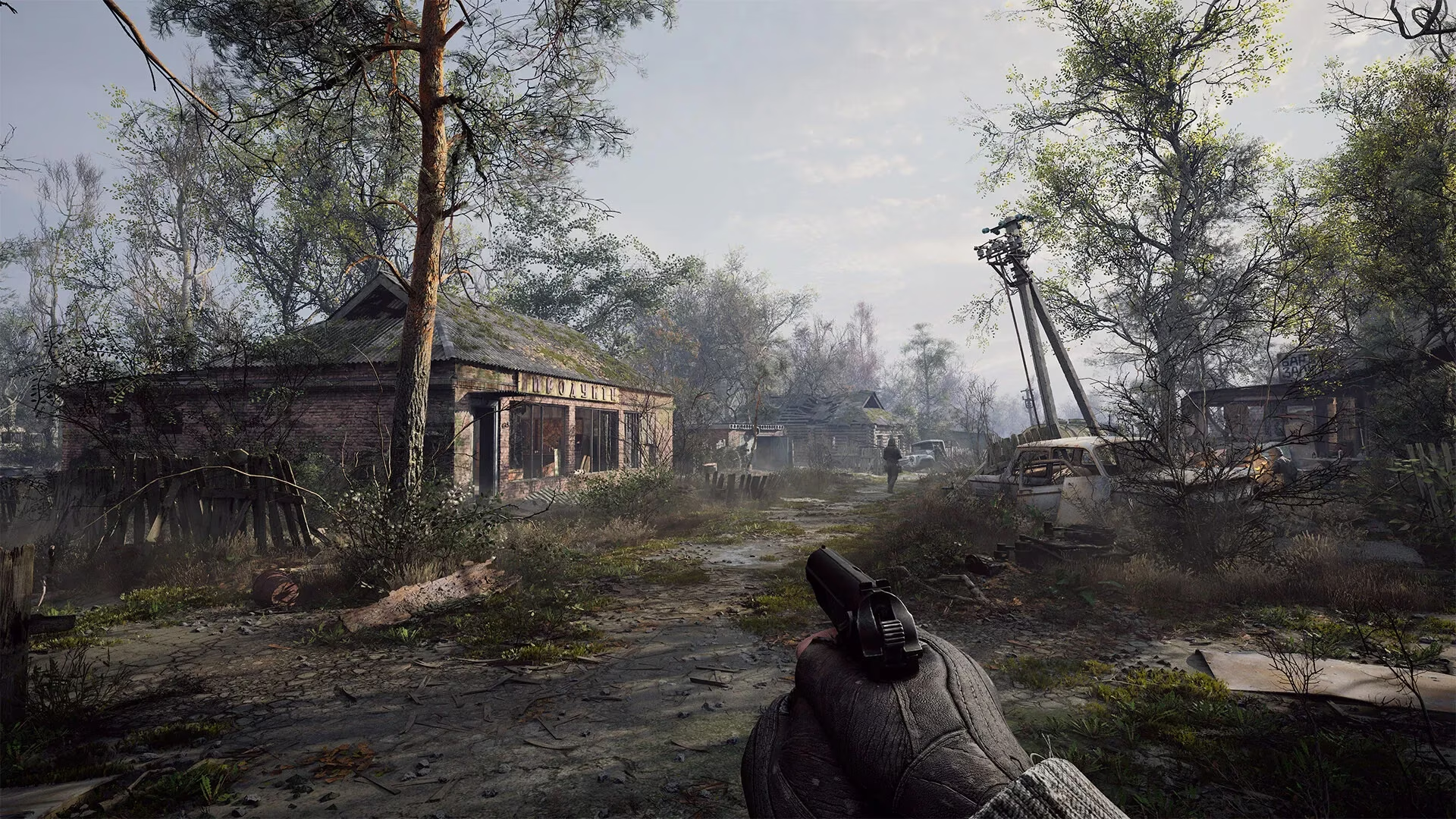
Let me set the scene. On the surface, managing hunger and radiation might feel like just another survival chore, and indeed GSC Game World has toned down some of the micromanagement compared to its predecessors. But that’s a deceptive kindness. The real brutality lies in the game’s relentless demand for patience and endurance. The Zone is littered with anomalies—invisible gravitational traps, fiery whirlwinds, and electrical pockets that will shred you in seconds if you aren’t carefully reading the environment. Defusing these threats requires methodical bolt-throwing and a sixth sense for subtle audio cues. I lost count of how many times I crept through a seemingly calm tunnel, only to be turned into a fine mist because I ignored a faint shimmer. There’s no forgiving checkpoint here; you’re sent back to your last manual save, and that save might be twenty minutes behind a gauntlet of horrors.
Inventory management is its own form of psychological torture. Every bullet, medkit, and sausage link has weight, and the encumbrance system is merciless. You can’t just hoard every shiny artifact you find—exceed your carry limit by even a gram, and your stamina drains at an absurd rate, leaving you a waddling target for the mutants drawn by your heavy breathing. Speaking of mutants, the ones in S.T.A.L.K.E.R. 2 are nightmares crafted from radiation and spite. Bloodsuckers turn invisible and lunge from the shadows, often in packs, while fleshes and boars will hunt you across several hundred meters if you so much as glance at them wrong. Surviving an encounter usually requires a careful mix of sprinting, environmental kiting, and praying that you haven’t aggroed something even nastier while escaping.
And then there’s the gunplay. Firearms in the Zone are terrifyingly lethal—for both you and your enemies. A single well-placed round from a bandit’s rusty AK can send you to the loading screen, which means every firefight is a high-stakes chess match. You can’t just run and gun; you need to scout, plan cover, and consider retreat routes before firing a single shot. Early on, I stumbled upon a military checkpoint and thought I’d be clever by picking off the soldiers from a distance. A grazing bullet shredded my armor, causing bleeding that I couldn’t stem fast enough because I’d forgotten to hotkey bandages. I bled out behind a crumbling wall, staring at the loot I would never collect.
One design choice that cements the game’s difficulty is the complete absence of fast travel. I can’t stress enough how much this changes your mindset. Every trek from a safe hub to an objective is a perilous expedition. You memorize anomaly patterns, track the time of day because nights bring deadlier mutants, and weigh whether a side route is worth the extra ammunition you’ll spend on random encounters. When a mission sends you deep into a swamp filled with radiation pockets, you don’t just hold forward—you calculate if your gas mask filters will last the round trip. I once misjudged a route through the Red Forest and ended up in a pitch-black thunderstorm, desperately trying to follow a faint anomaly detector beep while packs of blind dogs circled. No fast travel means you earn every meter of progress with sweat and screams.
Why subject myself to this? Because overcoming such adversity creates stories that stick with you. The moment I finally retrieved a rare artifact from a basement crawling with poltergeists, my hands were shaking, and I felt a genuine rush of triumph that few modern games deliver. S.T.A.L.K.E.R. 2 doesn’t apologize for being cruel, and in 2026 I still consider it a benchmark for hardcore, uncompromising design. If you’re ready to lose yourself in a beautiful, punishing world where survival feels earned, the Zone is waiting. Just remember to bring extra bolts—and patience.
Key difficulty factors at a glance:
| Challenge Aspect | Why It’s Devastating |
|---|---|
| Anomaly navigation | Instant-kill zones demand constant vigilance; no room for rushing. |
| Inventory & encumbrance | Strict weight limits punish loot hoarding and force hard choices. |
| Lethal combat | A few shots can kill you, so every encounter is a tactical puzzle. |
| Mutant behavior | Stealth and aggression require adaptive strategies on the fly. |
| No fast travel | Every journey becomes a high-stakes planning exercise; mistakes are costly. |
| Environmental hazards | Radiation, storms, and darkness compound during long treks. |
As I look back on 2024’s brutally difficult games, I can’t help but admire how S.T.A.L.K.E.R. 2 rekindles the spirit of 'hardcore' by making you respect its world. You don’t just play it—you survive it.