Black Myth: Wukong dazzles with stunning armor sets, but its lack of a transmogrification system disappoints players seeking style and power.
The visual splendor of Black Myth: Wukong is undeniable. From the moment players first control the Destined One, they are immersed in a world where every rock, leaf, and fabric fold is rendered with breathtaking artistry. The game’s armor sets are particularly magnificent, each one a masterpiece of intricate design that tells its own story of mythical craftsmanship. Yet, a peculiar and frustrating limitation shackles this artistic achievement: players are forced to choose between the stat benefits of their most powerful gear and the visual identity they desire for their character. In a single-player experience as rich and personal as this, the absence of a transmogrification system feels like a glaring oversight.
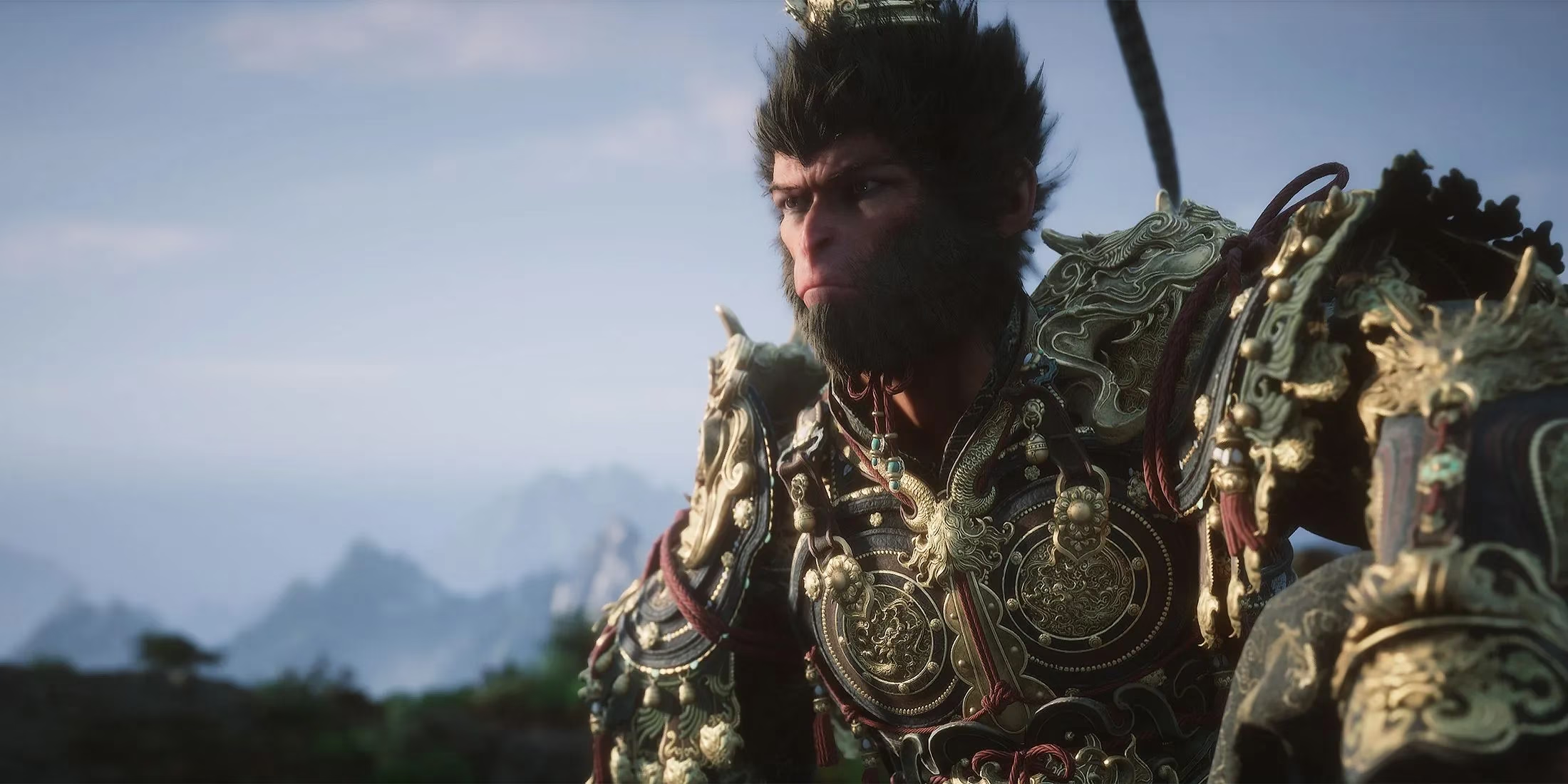
Transmogrification, or 'transmog,' has evolved from a niche convenience to a standard expectation in modern RPGs. It’s the simple, elegant solution that allows players to apply the visual appearance of one piece of gear to another while retaining the underlying stats. This mechanic celebrates player expression and respects the artistic labor poured into every asset. While some might point to the Soulslike genre—a clear inspiration for Black Myth: Wukong’s combat—as historically lacking this feature, the comparison falters. Those games often have competitive multiplayer elements where identifying an opponent's armor at a glance can be tactically crucial. Black Myth: Wukong, however, is a purely solo journey. There is no PvP arena, no invasion system. The only person who needs to appreciate the Destined One’s appearance is the player controlling him. Without this multiplayer constraint, the argument against transmog evaporates.
Currently, players can craft over ten distinct armor sets throughout their pilgrimage. The progression is tangible:
-
Early Game Sets: Simpler in design, often featuring worn leather and basic iron. They offer humble protection but lack the majestic flair of later gear.
-
Mid-Game Sets: Begin to incorporate more mythical motifs and higher-quality materials like polished jade and enchanted silks.
-
Late Game Sets: True works of art, adorned with flowing capes, intricate glowing patterns, and materials that seem to pulse with celestial energy.
Each set not only changes how the Destined One looks but also provides unique gameplay bonuses. A set might boost spirit regeneration, increase resistance to a specific element, or enhance certain combat skills. This creates a painful dilemma. A player might adore the rugged, nomadic look of the early-game "Wayfarer's Garb," but its stats become obsolete by the third chapter. To survive the increasingly ferocious bosses, they must don the late-game "Celestial Emperor's Raiment," which might not align with their personal vision for their character. Their heroic identity is sacrificed at the altar of necessity.
The problem extends beyond full sets to individual pieces, especially headgear. The game features various crowns, helmets, and headbands, each with a unique aesthetic. However, equipping a headpiece that isn't part of your current armor set can disrupt or nullify the valuable set bonus. This makes mixing and matching for fashion a punishable offense against optimal play. Imagine finding a stunning "Phoenix Coronet" but being unable to wear it because it would break the defensive bonus from your "Mountain Breaker Armor." A transmog system would be the perfect remedy, allowing players to visually wear the Phoenix Coronet while statistically wearing their optimal helmet. Game Science’s incredible design work on these items would finally get the appreciation it deserves, as no piece would be relegated to the inventory purely for its looks.
Looking ahead to 2025 and beyond, the need for transmog only grows stronger. Game Science has confirmed plans for expansions and DLC, which will almost certainly introduce new regions, stories, and of course, new armor. The wardrobe will expand, offering even more dazzling options. Without transmog, each new, more powerful set will simply bury the old favorites deeper into obsolescence. The developers could take a page from games like Stellar Blade, which successfully delivers regular cosmetic updates to keep players engaged. However, those cosmetic updates are most valuable when players can actually use them without compromising their build.
The community's wishlist is clear:
-
A Transmog NPC or Menu: A simple interface, perhaps managed by a wandering artisan spirit or at a central shrine, where players can pay in-game currency (spirit fragments, rare materials) to bind appearances.
-
Unlock-on-Acquire System: Once you craft or find a piece of armor, its appearance is permanently added to a visual library for future use.
-
Full Piece Independence: The ability to transmog the helmet, chest, arms, and legs independently for ultimate creative freedom.
Implementing this feature would be a win-win. Players gain unparalleled freedom to craft their perfect version of the Destined One, leading to more personalized and memorable playthroughs. The online community would flourish with fashion showcases and creative builds, extending the game’s lifespan and social reach. Most importantly, it would honor the phenomenal artistic effort that defines Black Myth: Wukong. Every painstakingly modeled scale on a dragon-hide vest, every elegantly embroidered symbol on a sage’s robe, would have a permanent place in the player’s journey, not just a temporary one in their stats. For a game so deeply concerned with myth, legacy, and identity, allowing players to truly own their character's visual legacy is the natural next step in its own legendary tale. 🎭✨