Soulslike evolution and Lords of the Fallen parallel worlds shine in this compelling exploration of innovation and genre transformation.
In the world of video games, few genres have experienced such a dramatic and fascinating evolution as the 'soulslike'. What began over a decade ago as a straightforward, often clumsy, attempt to replicate the punishing magic of FromSoftware's Dark Souls has blossomed into a rich and diverse genre teeming with innovation. The journey from the largely forgotten Lords of the Fallen in 2014 to the groundbreaking titles showcased in recent years is a story of creative maturation, where developers have learned to use the foundational language of Souls games not to simply copy, but to compose entirely new and compelling symphonies of challenge and atmosphere.
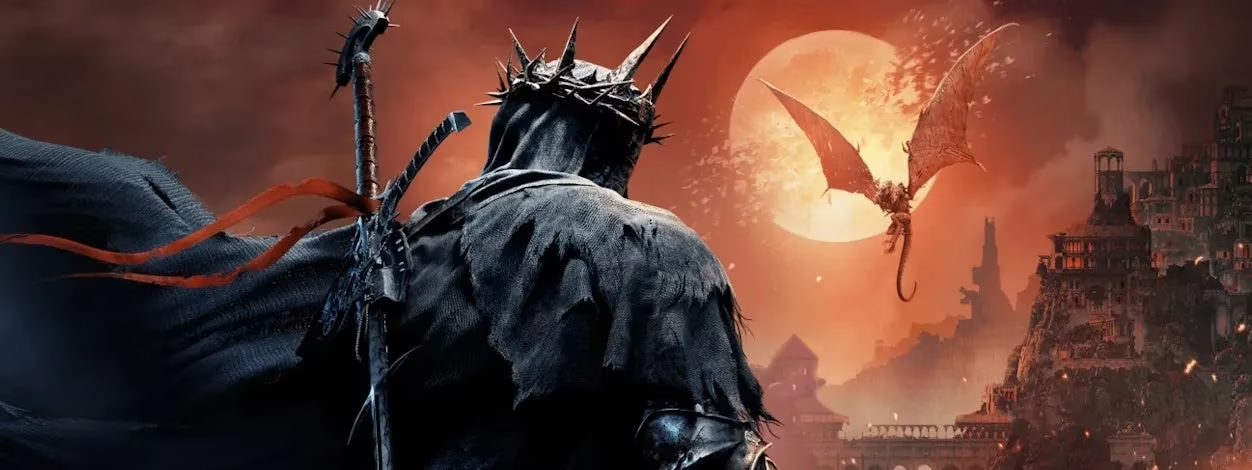
The Radical Reinvention: Lords of the Fallen's Parallel Worlds
CI Games and Hexworks' new vision for Lords of the Fallen represents perhaps the most audacious reimagining of the genre's core tenets. On the surface, it is a devout follower of the FromSoftware doctrine, with its weighty combat, intricate level design, and somber visual style paying clear homage. However, its revolutionary Umbral Lantern mechanic shatters traditional expectations. This device grants the player the power to shift between two parallel realities: Axiom, the realm of the living, and Umbral, the haunting realm of the dead. This isn't a mere gimmick; it fundamentally rewires the soulslike experience.
-
Exploration Transformed: The lantern turns environmental navigation into a dynamic puzzle. A dead end in one realm may be a clear passage in the other, encouraging constant, strategic perspective shifts reminiscent of ingenious level design seen in other genres.
-
Combat Deepened: The lantern's utility extends into battle, where it can be used to wrench souls from enemies, leaving them vulnerable to devastating attacks. This adds a complex, tactical layer to every encounter.
-
A Seamless Integration: Crucially, this mechanic isn't tacked on. It is woven into the very fabric of the game's systems, demonstrating a move from imitation to confident genre expansion. The initial clumsiness of mastering this new tool gives way to the thrilling realization that the rules of engagement have been beautifully altered.
The Masterful Refinement: Lies of P's Elegant Craftsmanship
If Lords of the Fallen seeks to radically alter the formula, Lies of P from Neowiz thrives through masterful refinement and a uniquely poignant tone. It is often described as the soulslike that feels most like an authentic FromSoftware creation, boasting impeccably tight controls, satisfyingly heavy weapon swings, and a deeply melancholic atmosphere. Its setting in the plague-ridden, turn-of-the-century city of Krat, however, carves out a distinct identity.
While its Victorian-inspired fashion and dark urban sprawl invite comparisons to Bloodborne, Lies of P cultivates a different vibe—less cosmic horror, more tragic, steampunk-tinged despair. Its enemies, malfunctioning puppets, occupy a disturbing space between the comical and the horrifying, exemplified by the King of Puppets, a boss who attacks because you refuse his invitation to dance.
Lies of P's most intriguing innovation lies in its narrative agency, a rarity for the genre. Drawing from its Pinocchio inspiration, the game incorporates a lying system where the player's deceptions to NPCs promise to influence one of three distinct endings. This introduces moral dilemmas and player choice into a framework traditionally known for its opaque, predetermined stories.
Mechanically, it is a polished amalgamation of Soulsborne hallmarks:
| Inspired Feature | Lies of P's Interpretation |
|---|---|
| Bloodborne's Rally System | A health-regain mechanic for aggressive play. |
| Dark Souls 3 Weapon Arts | Special skills tied to specific weapons. |
| Sekiro's Prosthetic Tool | A customizable mechanical arm with gadgets like a grappling "Puppet String" and explosive rockets. |
This synthesis is executed with such skill that it feels less like theft and more like a respectful, first-class homage that stands tall on its own merits.
The Genre-Stretching Experiment: Black Myth: Wukong's Dazzling Vision
Black Myth: Wukong represents the third pillar of modern soulslike evolution: stretching the genre's conventions into breathtaking new forms. Game Science's adaptation of the classic Journey to the West is visually and mechanically distinct. It abandons the defensive shield block, forcing combat into a realm of incredible speed, evasion, and fluid transformation. The rhythm of battle—a monkey warrior against mythical beasts—feels entirely unique, successfully avoiding the "bootleg" sensation that plagues lesser imitators.
A key differentiator is its approach to magic. Abilities operate on cooldown timers rather than a depleting mana pool. This design encourages the constant, integrated use of spells like Immobilize or Ring of Fire as core components of the combat loop, not just niche tools for specialized builds. This, coupled with its stunning, animal-focused aesthetic—far removed from Gothic or medieval gloom—positions it as a groundbreaking experiment. It proves the soulslike template is flexible enough to house epic, mythical tales drenched in vibrant color and fast-paced, magical spectacle.
Beyond the Showfloor: A Genre in Full Bloom
The innovations showcased by these three titans are not isolated phenomena. The genre is flourishing with creative interpretations:
-
Star Wars Jedi: Survivor brilliantly fused Sekiro's parry-based combat with Metroidvania-inspired exploration, creating the definitive lightsaber combat experience and expanding what a "soulslike" level structure can be.
-
Titles like Flinklock: The Siege of Dawn experiment with injecting cinematic, God of War-style flair into the foundational template.
These examples underscore the genre's vital shift. Developers are no longer just creating souls clones; they are crafting souls likes. They understand that new ideas—whether a parallel world lantern, a narrative lying system, or cooldown-based magic—don't dilute the potent FromSoftware formula. Instead, they nourish it, allowing the genre to grow, diversify, and mature.
The journey from the forgettable origins of the first Lords of the Fallen to the sophisticated, confident innovations of today is remarkable. Soulslikes have shed their reputation as mere bandwagon cash-ins and have cemented themselves as one of the most significant, exciting, and creatively fertile genres in modern gaming. The legacy of Dark Souls is no longer one of imitation, but one of profound inspiration, pushing developers worldwide to build upon a formidable foundation and create unforgettable worlds of their own. 🎮✨