Black Myth: Wukong and Chinese developers spark a bold gaming revolution, blending Eastern artistry with console and PC innovation.
The landscape of global gaming is on the precipice of a seismic shift, and the epicenter of this tectonic movement is none other than China. According to visionary developers like 'Soulframe' Liang from S-Game, the studio behind the breathtakingly fast action RPG Phantom Blade Zero, the world is witnessing a monumental turning point. Liang, with the fervor of a prophet, declares that Chinese developers are no longer content with their mobile gaming kingdom; they are now building bridges to conquer the realms of console and PC. This isn't just an evolution; it's a full-blown cultural and creative merger, a glorious fusion of Eastern artistry with global gaming systems, and the harbinger of this new era is the mythical, the monumental, Black Myth: Wukong.
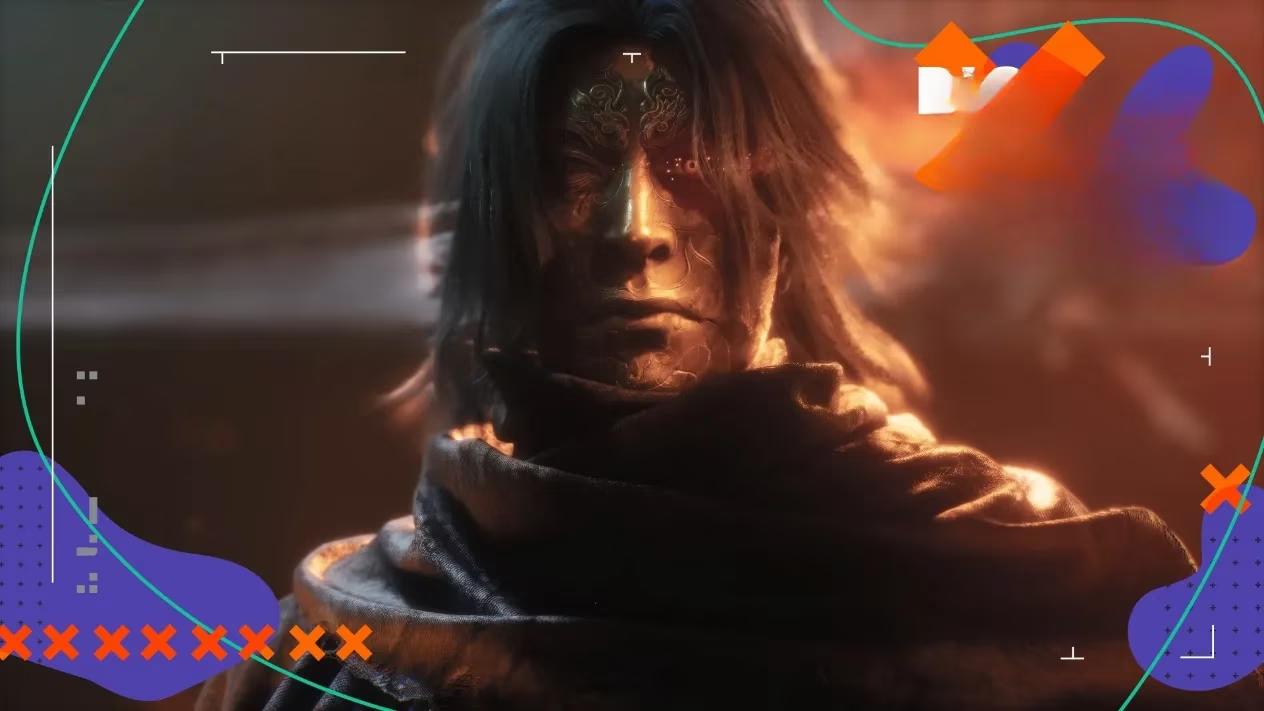
The Wukong Watershed: A Prophecy of Success
For Liang and countless others, Black Myth: Wukong is not merely a game; it is a prophecy about to be fulfilled. He speaks of it with unwavering conviction as a watershed moment, a colossal hit that will shatter preconceptions and blaze a trail for an entire generation of creators. "I think Black Myth: Wukong will be a big hit," Liang proclaims, his words echoing through the industry. "There are more to come. I think they'll all be very successful, and I think that's the trend. It's definitely the beginning." This sentiment is a rallying cry, acknowledging the latent, explosive talent within China's developer community, a talent that honed its skills in the crucible of MMOs and mobile games and is now ready for its global ascension.
The evidence supporting this prophecy is staggering. As of 2026, following its landmark release, Black Myth: Wukong cemented its legacy, becoming one of the most wishlisted and celebrated titles on platforms like Steam. Early impressions were not just positive; they were ecstatic. Reviewers hailed it as "among the best and best-looking action RPGs" in years, praising its masterful blend of deep, approachable combat systems, stunning visual fidelity, and a distinct identity that transcends its Soulslike inspirations. Its success is the keystone for the entire archway Liang describes.

The Platform Exodus: From Pocket-Sized to Epic Scale
This revolution is characterized by a dramatic platform migration. For over a decade, the Chinese market was synonymous with free-to-play mobile titans. Now, developers are executing a grand exodus. Studios like S-Game, after a decade in mobile, are channeling their resources and ambition into premium, narrative-driven experiences for PlayStation 5 and PC. Liang sees this as an exhilarating, vital trend: "I think it's a good trend, to build new IP, very original creations."
The catalyst for this shift is often credited to the groundbreaking success of HoYoverse's Genshin Impact, a title that proved Chinese-developed games could achieve unparalleled, cross-platform dominance. However, Liang predicts Black Myth: Wukong will mark a new, even more audacious phase: a focused assault on the core console and PC market, often without a mobile counterpart. This represents a bold declaration of artistic and commercial confidence.
A Rising Tide Lifts All Boats: Collaboration Over Competition
In a stunning display of communal spirit, Liang dismisses the notion of cutthroat competition among these Chinese epics. Instead, he frames their success as synergistic. "Phantom Blade Zero actually benefits from the success and popularity of such games, rather than directly competing with them," he explains. The philosophy is simple yet powerful: every triumph for a game like Black Myth: Wukong expands the global audience's appetite for high-quality Chinese narratives and gameplay. They are not rivals; they are comrades-in-arms in the same glorious campaign to captivate the world.
-
The Vanguard: Black Myth: Wukong (Game Science) – The mythic trailblazer.
-
The Lightning Bolt: Phantom Blade Zero (S-Game) – The irresponsibly fast action spectacle.
-
The Cross-Platform Pioneer: Genshin Impact (HoYoverse) – The genre-defining phenomenon that paved the way.
-
The Future Wave: A multitude of unannounced projects from studios formerly dedicated to mobile and MMO development.
The Engine of Innovation: Looking Beyond the Hype
This movement is underpinned by formidable technical prowess. Developers are not just creating beautiful worlds; they are pushing the boundaries of their engines, as teased by Black Myth: Wukong's team with their "non-canon" sequel flex. While topics like AI spark discussions about "profound technological revolution," the core focus remains on raw, human-driven creativity and execution. The goal is to deliver experiences that are not just technically impressive but emotionally resonant and endlessly playable.
The Global Stage Awaits
As of 2026, the bridge Liang spoke of is no longer under construction; it is open for traffic, and the procession of Chinese-developed masterpieces has begun. Black Myth: Wukong's launch was the opening ceremony, and titles like Phantom Blade Zero are the next magnificent attractions. The trend is clear, irreversible, and incredibly exciting. The world is no longer just looking at China as a market; it is eagerly awaiting its next export of interactive art. The message from developers like 'Soulframe' Liang is unequivocal: this is only the beginning. The reservoir of talent is deep, the ambition is boundless, and the era of Chinese gaming dominance on the global console and PC stage has decisively dawned. 🎮✨
| Aspect of the Revolution | Manifestation | Key Example |
|---|---|---|
| Creative Focus | Shift from live-service mobile to original, premium IP | Phantom Blade Zero, Black Myth: Wukong |
| Platform Strategy | Primary launch on core consoles/PC, often sans mobile | Black Myth: Wukong's PS5/PC focus |
| Industry Impact | Success breeds confidence and expands the audience for all | Liang's "rising tide" philosophy |
| Global Perception | From market to major creative powerhouse | Record-breaking wishlists and critical acclaim |
| Future Outlook | A sustained wave of high-quality releases from new studios | The "many more to come" predicted by Liang |