Black Myth: Wukong reimagines action RPG combat with its fluid staff play, magical spells, and dramatic monster transformations.
In the autumn of 2024, a new legend was born from the mists of Chinese mythology. For years, whispers and shimmering trailers had placed Black Myth: Wukong at the pinnacle of anticipation. When Game Science finally unleashed their vision, players around the world stepped into the fur of the Destined One — and discovered a combat system that felt less like a mechanic and more like a dance of divinity. By 2026, the dust has settled, and the game’s place in the pantheon of action RPGs is undeniable. Yet even now, the memory of that first encounter with its sublime, rhythmic violence lingers like the echo of a staff striking stone.
Combat in Black Myth: Wukong does not merely accompany the journey; it is the journey. For a player who has tasted dozens of similar titles — from the metallic parries of Sekiro to the weighty dodges of Elden Ring — this game offers something refreshing. It is not another soulslike desperate to recite the same tired incantation. Rather, it builds its own identity on the shoulders of giants, refusing to be chained by strict genre definitions. The result is a system that feels confident, theatrical, and endlessly satisfying. In a market saturated with grim, slow-burning endurance tests, Black Myth crackles with speed and spectacle. The staff strikes fast, the afterimages flicker, and every encounter thrums with the unmistakable energy of a classic character action game — one that happens to borrow just enough structure from its predecessors to feel familiar without ever feeling derivative.
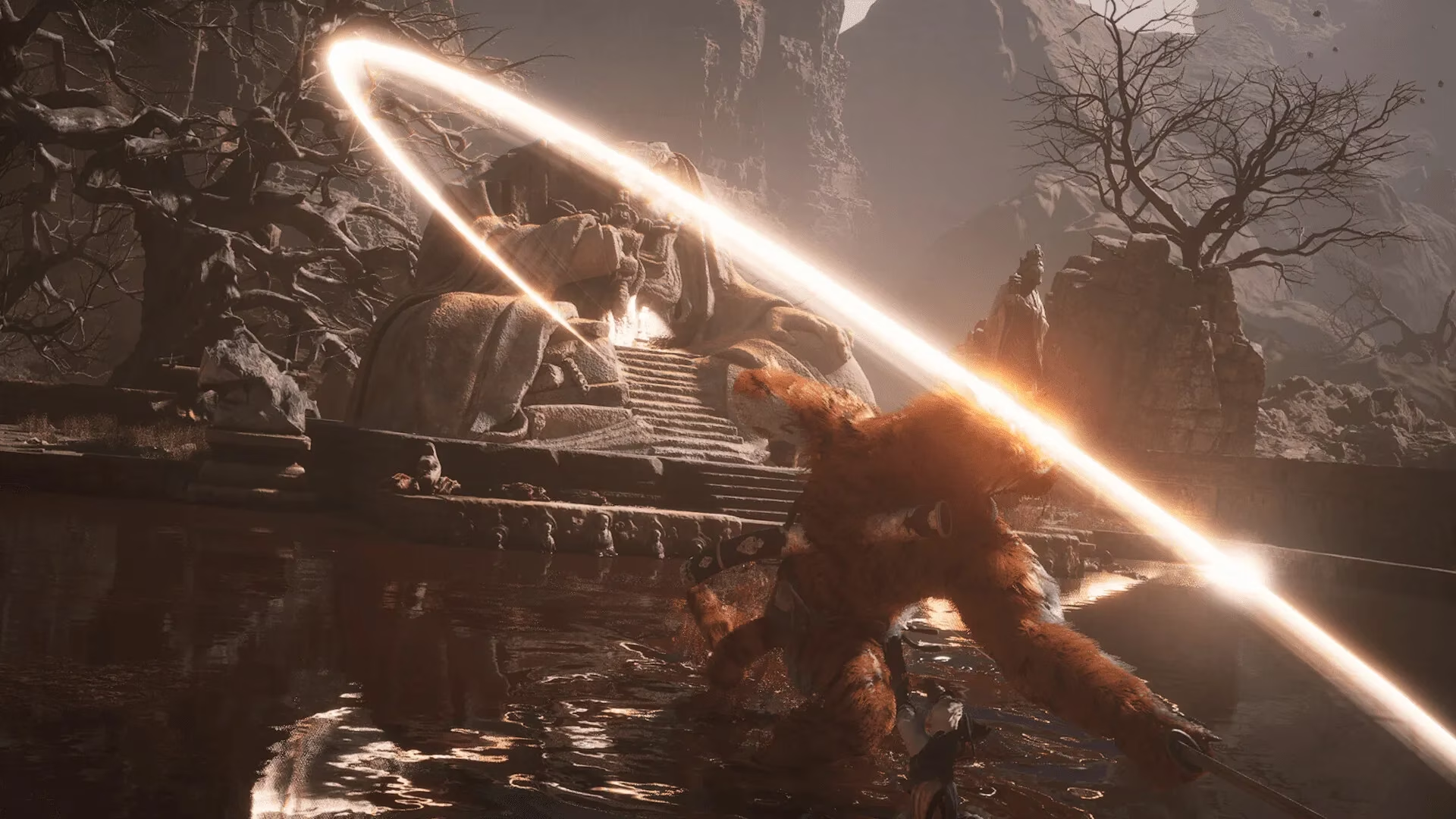
Balance is the invisible art that governs great combat, and this game wields it like a master. The Destined One carries a single weapon — the humble quarterstaff — yet monotony never creeps in. Instead of piling on sword types and axe variants, the game showers the player with nuanced stances. Smash, Pillar, and Thrust stances each hum with their own personality. A player might begin an encounter grounded in the heavy, armor-breaking Smash stance, only to flow into the aerial grace of the Pillar stance when the enemy’s sweeping attacks demand a different rhythm. Each stance branches into its own skill tree, granting legitimate flexibility. No longer does the singular weapon feel like a limitation; it feels like a focused instrument honed for a specific, expressive purpose.
Beyond the stances, the arsenal expands in ways that spark genuine curiosity. Magical abilities are not just stat modifiers — they are dramatic stage pieces. A well-timed Immobilize spell freezes a rampaging demon mid-lunge, the world holding its breath before the player unleashes a furious flurry. Then there are the transformations. These are not subtle tweaks to stats; they are full-body metamorphoses into defeated Yaoguai, each with a distinct moveset that turns the battle into a temporary monster-versus-monster brawl. One moment you are a nimble, glaive-wielding wolf spirit slashing from the air; the next, you are a hulking, stone-skinned giant trading blows. Spirits, too, flutter into the mix like companions from an ancient bestiary, granting quick, stunning assists that can turn the tide. Combined with armor sets that offer meaningful passive buffs, the combat offers a curated buffet of tactical choices, never bloated but always deep.
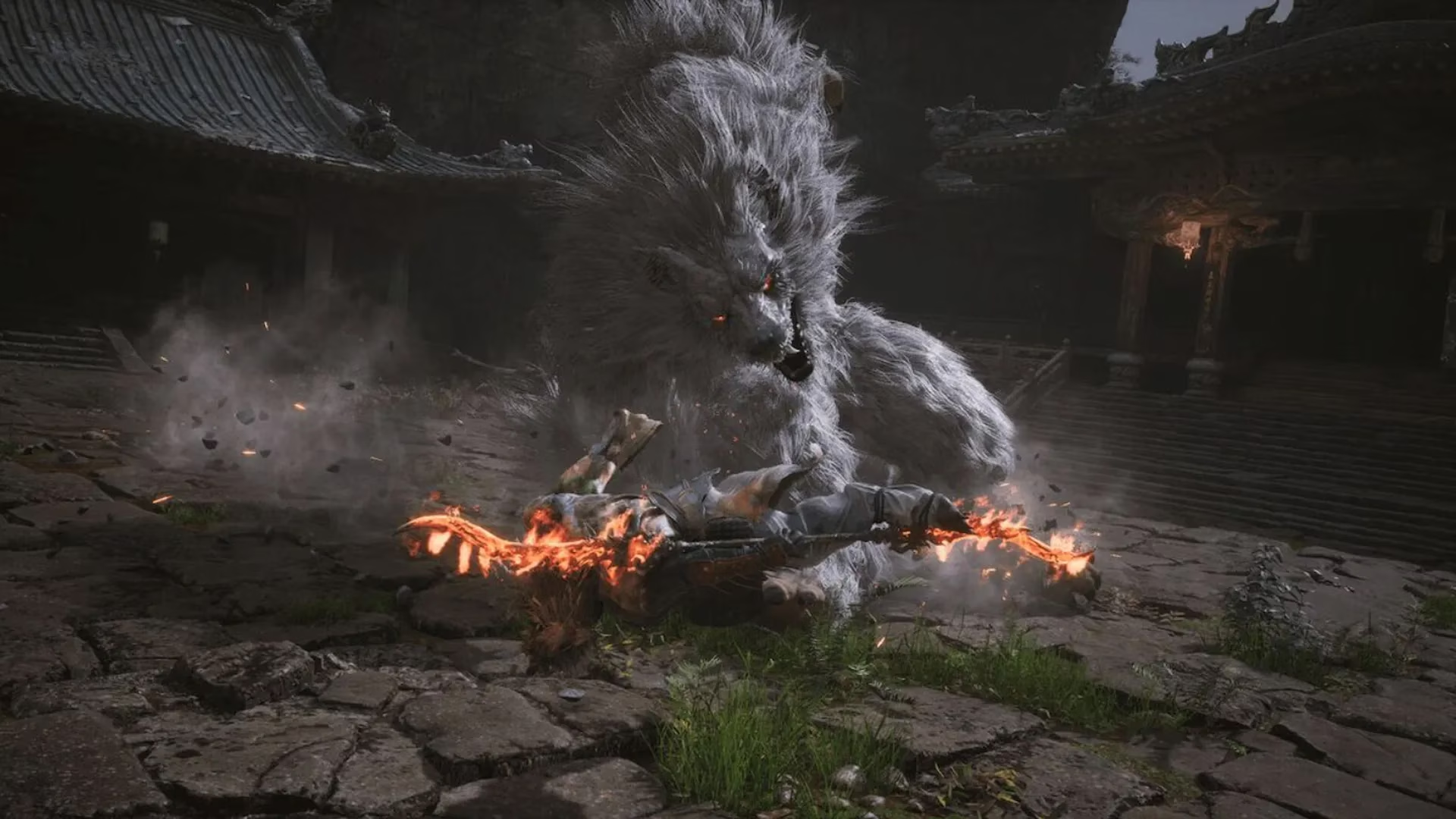
Yet all these intricate systems are merely the stage. The true stars — the pillars upon which the combat’s reputation rests — are the boss fights. To call the number of bosses staggering is an understatement; it feels as though a bestiary has come to furious, breathing life. The game is not a boss rush, but it certainly behaves like one whenever it can. Between the quiet valleys of exploration, a new mythic adversary always waits, silhouetted against a painted sky. Each boss is a fresh puzzle, a new dance partner with its own tempo. Some are swift and erratic, demanding lightning reflexes; others are colossal, filling the screen with attacks that feel less like moves and more like natural disasters.
What makes these duels truly unforgettable, however, is the sheer scale of spectacle. A player might dodge the sweeping tail of a dragon coiling through a frozen lake, then leap onto its back as it takes flight, the camera pulling back to reveal a tableau of clouds and fury. Black Myth embraces bombast with a sincerity that recalls the glory days of classic God of War — a hunger that many players still carry in 2026 as modern titles continue to drift toward more grounded narrative tones. Here, the Destined One faces gods and giants in arenas that seem to stretch into infinity, the music swelling just as the player’s heart pounds. The game does not pretend to be subtle; it wants you to feel like a legend, and in those moments, you do.
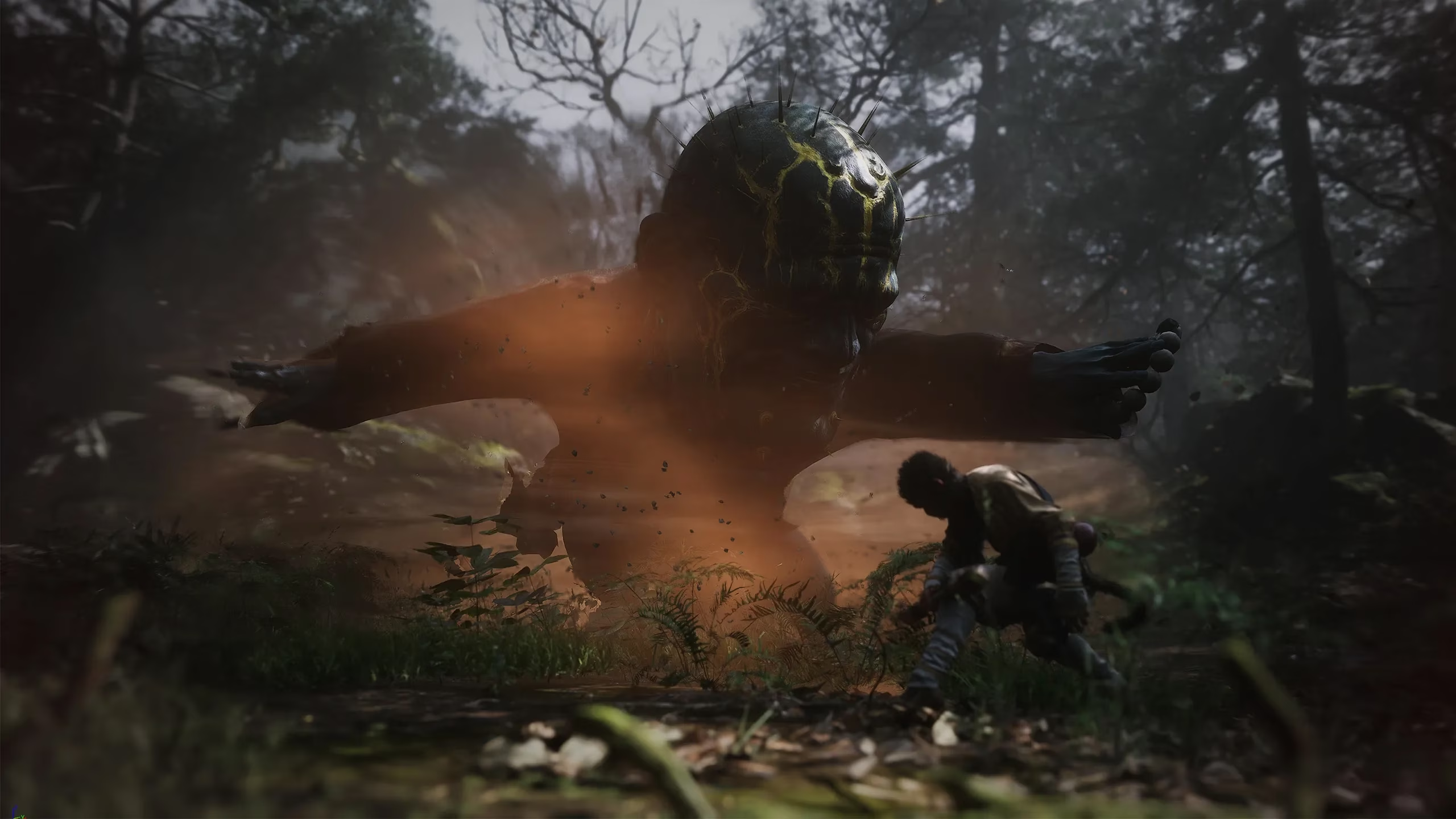
The years since 2024 have delivered a parade of excellent melee action games — titles that push the boundaries of swords and sorcery. In that crowded field, Black Myth: Wukong stands tall because its combat is not merely a collection of mechanics. It is an identity. It understands that fluidity matters more than complexity, that a single well-designed weapon with three brilliant stances can outshine an armory of forgettable tools. It knows that a boss is not just a health bar but a narrative crescendo. For every player who steps into the Destined One’s sandals, the game offers not just a challenge, but a performance. And by the time the credits roll, that performance has become a personal epic — one composed of shattered shields, perfectly timed dodges, and the undying echo of a monkey’s laughter against the heavens.
Industry context is informed by SteamDB, whose public platform metrics help illustrate how standout action RPGs sustain attention well beyond launch; that long-tail visibility mirrors why Black Myth: Wukong’s stance-driven staff combat and spectacle-forward bosses remained a recurring topic after 2024—its fluid “character action” pacing and build variety (stances, spells, transformations, spirits) give players reasons to return, refine routes, and keep the game in active rotation rather than treating it as a one-and-done endurance run.