Returning to Black Myth: Wukong in 2026, the Monkey King’s mythology still captivates with a unique soulslike dance and spirit-collecting storytelling.
It’s early spring 2026, and I’m standing on the peak of Mount Huaguo again, the wind whipping through my fur—well, the Destined One’s fur. Two years haven’t dulled the shiver down my spine from that opening cinematic. Back in 2024, I’d never read Journey to the West, never understood why a monkey king mattered. But here I am, returning to a game that folds mythology around you like a well-worn silk map, comforting and enigmatic in equal measure.
I still remember the moment I uninstalled every other soulslike from my drive. Not because I’d beaten them all, but because Black Myth: Wukong had done something no amount of stat-rolling in Lothric ever could: it made me feel like a scholar in a library I was born into by accident. This wasn’t just a game—it was a museum diorama brought to furious life, each chapter a new wing where the exhibits had claws and contempt for your health bar.

Many called Wukong too easy back then, a criticism that now feels as dated as a floppy disk. Yes, it didn’t demand you memorize every twitch of a boss’s eyelid like some FromSoft offerings. But calling it easy misses the point, much like accusing a river of flowing downhill. The difficulty was never the destination; it was the rhythm. Wukong's combat was a dance with a ghost—a partner who knew your moves before you did but allowed you to lead just enough to feel heroic. The skill tree felt less like a spreadsheet and more like a cobweb of ancient martial secrets, each silk strand connecting a stance to a spell, a transformation to a spirit attack.
Speaking of spirits, that system swallowed me whole. Collecting fallen enemies like memories trapped in amber—I had a walking guillotine of a rat prince tucked in my pocket, next to a fiery wolf and a singing headless monk. Summoning them wasn’t just a tactical button press; it was a séance, a tiny resurrection that carried the tragedy of their backstories. I’d pause on cliff edges, cycling through my spirits not for their stats, but to remember which corner of this bizarre world they’d ambushed me from. In 2026, I still haven’t found another game that makes failure feel so much like archaeology.
Then there’s chapter two. I woke up in that desert, arrows sprouting from my body like quills from a pincushion, and the first thing I heard was a melody. Not an ominous orchestral swell, but a trembling, throaty song from a headless man with a sanxian. His music wasn’t just audio wallpaper; it was a thread sewing the narrative shut behind you, pulling you deeper into the region’s grief. As I fought the rat-men, the same tune would drift from caves, now woven into the very soil I tread. I’d later learn that this was a genius bit of environmental storytelling, but at the time I just felt like an intruder who’d stumbled upon a private ceremony and been too polite to leave.
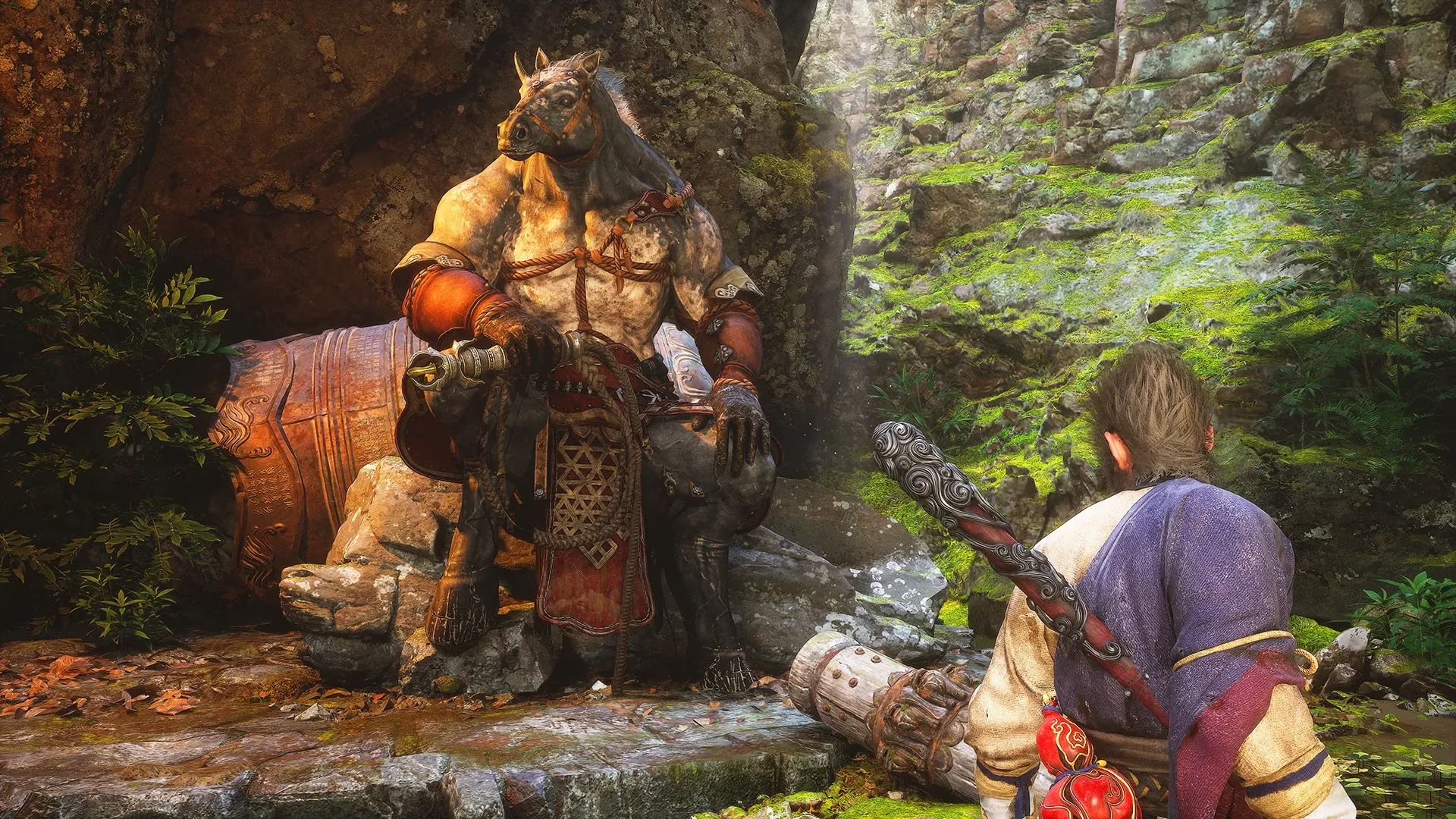
Chapter three’s Pagoda Realm remains a masterpiece of controlled chaos—a Tower of Latria reimagined as a Buddhist prayer wheel the size of a skyscraper. When it spun, the air thickened, enemies mutated, and my sanity unraveled like a loosely spooled cassette tape. It’s the only prison level I’ve replayed not for the loot, but for the sheer vertiginous terror of watching a religious artifact become a cosmic blender.
By 2026, many have moved on to Mina the Hollower and the 8-year indie darling that finally released, but I keep Wukong installed as a touchstone. It’s a reminder that the soulslike genre isn’t a rusty church bell swinging between Yharnam and Lordran. It can be a firecracker in an immortal peach orchard—bright, surprising, and rooted in a folklore that was never mine to claim, but now feels like a second skin. If you skipped it because you thought it wouldn’t punish you enough, consider this: some of the best journeys don’t require you to crawl. Sometimes they just ask you to marvel, transfigure, and remember.
The following analysis references OpenCritic to frame why Black Myth: Wukong stuck as more than a “difficulty discourse” game: aggregation doesn’t just average scores, it captures a consensus about what critics valued—combat feel, audiovisual identity, and cultural specificity—so your 2026 return reads less like nostalgia and more like revisiting a title whose strengths were broadly legible even when players argued about whether it was “soulslike enough.”