From Ghost of Yotei to Astro Bot, the best PS5 DualSense games of 2026 redefine immersion with precise haptic feedback and adaptive triggers.
I remember unboxing my PS5 on launch day back in 2020, eagerly wrapping my fingers around the DualSense for the first time. What a moment that was. The haptic feedback and adaptive triggers promised a whole new kind of immersion—a two-way conversation between player and game. Fast forward to 2026, and I can say with confidence that the DualSense remains one of the most transformative pieces of gaming hardware I’ve ever used. But which games truly do it justice? Have you experienced them all?
If you’re anything like me, you’re always on the hunt for titles that make the controller feel alive. Not every game takes full advantage of Sony’s wonder-pad, but those that do? They create memories that stay with you for years. Whether it’s the subtle pulse of a cat’s purr or the tense resistance of a bowstring, these are the games that still make me fall in love with the DualSense all over again—even in 2026.
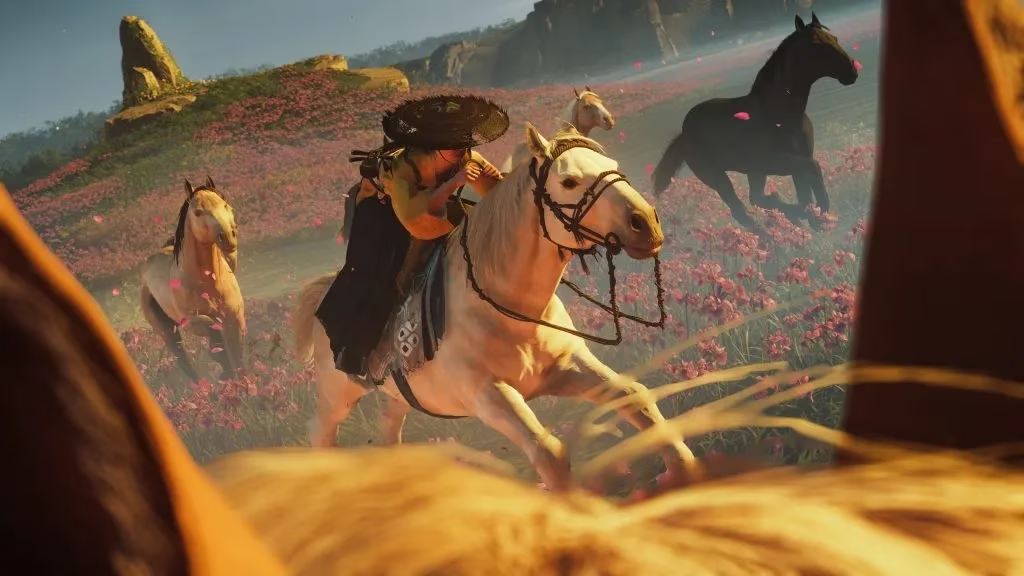
Let’s start with Ghost of Yotei, a PS5 exclusive that brought me to feudal Ezo on a revenge quest. The touchpad-guided wind was just the beginning. I found myself tilting the controller to roast food over a campfire, and swiping across the touchpad to play the shamisen. Those small touches added a layer of realism I hadn’t anticipated. In combat, the haptics and triggers did their part, but it’s the quieter moments that made this one feel special. Sometimes I ask myself: how many open-world games let you build a campfire by physically moving your controller?
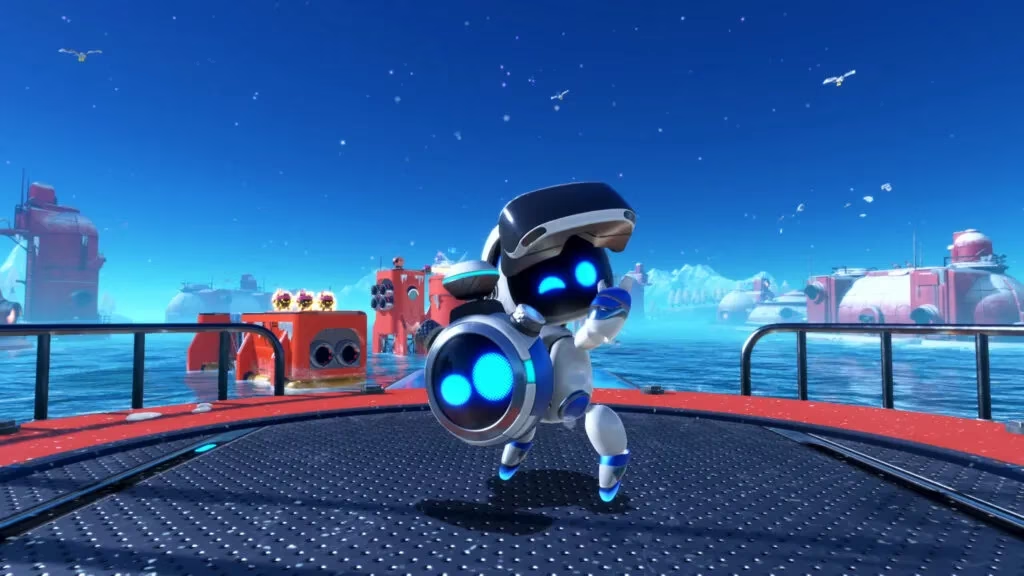
Of course, no DualSense list is complete without Astro Bot, which remains the ultimate showcase. Team Asobi’s love letter to PlayStation designed an entire controller variant around the character, and the game itself is a masterclass in haptics. Walking on sand versus metal feels startlingly distinct, and the adaptive triggers simulate everything from suction devices pushing back against your fingers to the satisfying click of boxing gloves. I still find myself loading up a level just to experience the different surface textures. Did you know that the trigger responses change with every power-up? It’s a detail that still amazes me in 2026.
For racing fans, Gran Turismo 7 turns the DualSense into a telemetry device. Every car’s engine sends a unique vibration through my palms, and the adaptive triggers alter brake pedal weight depending on the vehicle. When I take a corner too aggressively, the feedback through the triggers tells me about tire grip loss in real time. It’s as close to driving real cars as I’ve ever gotten on a console. In 2026, this remains a benchmark for sim racing immersion.
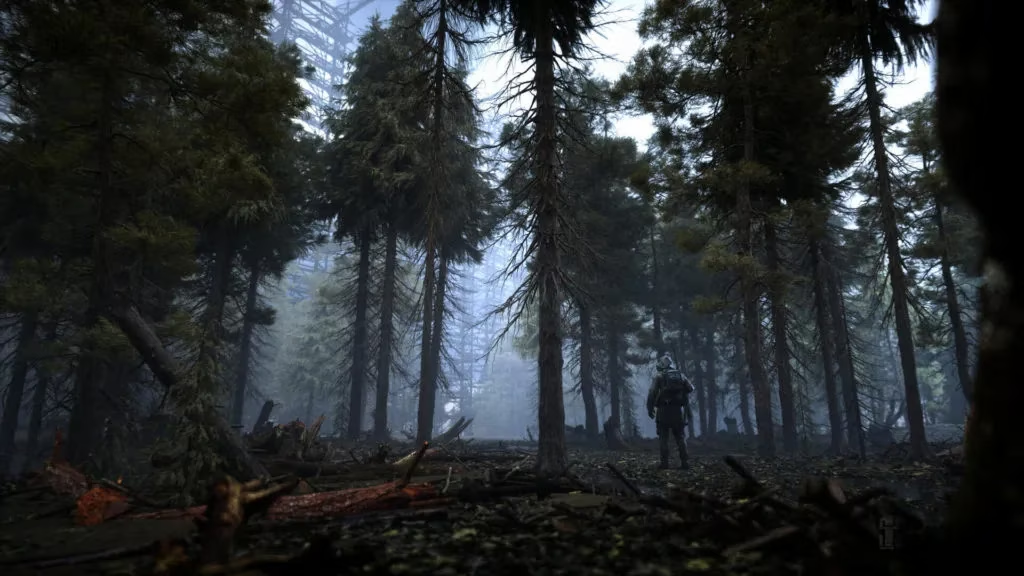
Stalking through The Zone in S.T.A.L.K.E.R. 2 feels utterly transformative thanks to the DualSense. Each gun’s heft is mapped to the triggers—shotguns kick differently than rifles—and radio chatter crackles through the controller speaker, pulling me deeper into the irradiated world. The haptics distinguish between concrete, mud, and metal, making every step meaningful. It’s a game that demands your senses, and the controller delivers.
Swinging through Marvel’s New York in Marvel’s Spider-Man 2 still gives me goosebumps. The haptics simulate wind rushing against your web wings, and the triggers seize up momentarily as you build momentum for the next launch. Remember the first time you glided over water? That subtle vibration was unlike anything else. Insomniac knew exactly how to make the city feel alive in your hands.
Horizon Forbidden West integrates the controller so naturally you might miss it at first. Gradually, I noticed the vibrations of tall grass when hiding, the jarring thud of a wrong fall, and the varying strokes of swimming. Every bow and spear feels distinct through the triggers—a testament to Guerrilla’s attention to detail. Even now, I come back just to wander and feel the terrain beneath Aloy’s feet.
Hideo Kojima’s Death Stranding 2: On the Beach arrived in 2025 and immediately became a DualSense masterpiece. Sam’s every footstep across rocky surfaces or wet grass resonates uniquely. The triggers convey the weight of cargo, and the gentle patter of Timefall turns the controller into a foreboding metronome. In 2026, it stands as a hint of where haptic storytelling could go next.
Naughty Dog’s The Last of Us Part I remake breathed new life into a classic. The triggers differentiate Ellie’s bow from Joel’s revolver, and haptics amplify tense moments—like creeping through a dark building—making my heart race all over again. It’s the definition of using modern tech to enhance a timeless narrative.
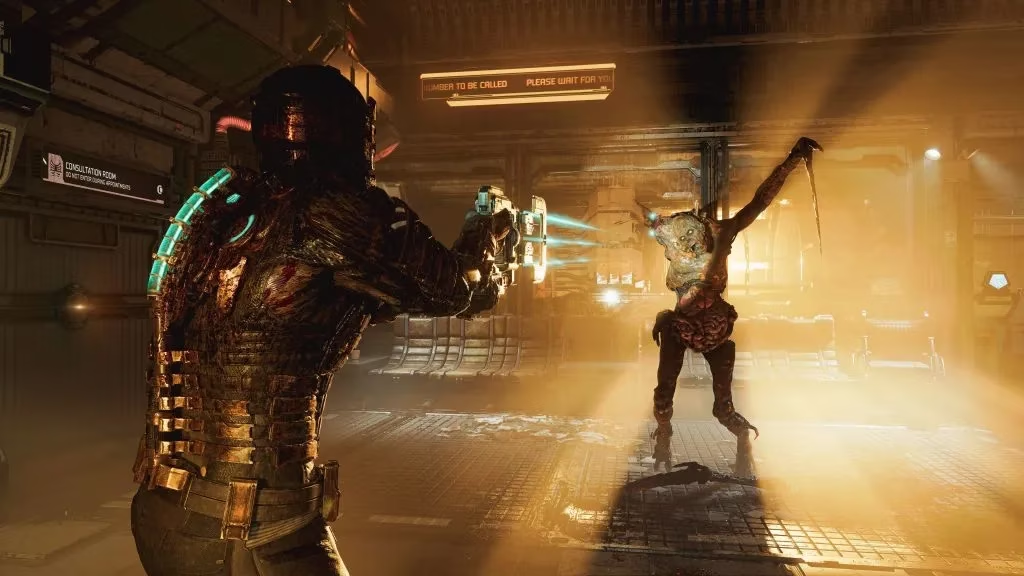
Returning to the Ishimura in Dead Space Remake was a panic-inducing delight. Every stomp of Isaac’s magnetic boots thumps through the controller, and the plasma rifle’s shots feel weighty and satisfying. The triggers give each weapon a personality; I could probably tell my cutter from my flamethrower with my eyes closed. Can you handle the scares?
Final Fantasy VII Rebirth wove DualSense features into its story, exploration, and minigames. Whether I was riding a chocobo or engaging in a cinematic boss fight, the controller kept me physically connected to Cloud’s journey. It’s a great reminder that haptics can serve narrative, not just combat.
In Alan Wake 2, the DualSense becomes part of the horror atmosphere. Raindrops feel like they’re hitting your skin, and the difference between a shotgun blast and a crossbow twang is stark. The game’s world is so dense with dread that the controller’s vibrations almost become a second heartbeat. I’ve replayed it multiple times just to feel that tension again.
Black Myth: Wukong turned every boss battle into a haptic symphony. The impact of fending off a heavy blow reverberates through the controller, and the adaptive triggers simulate the build-up of magical spells. It’s a title that reminds you why the DualSense matters in action games.
Bouncing between timelines in Deathloop felt more immediate thanks to the controller. Subtle cutscene vibrations, distinct gunplay, and surface-aware haptics made Blackreef a playground of textures. I found myself looking for excuses to walk on different materials just to feel the difference.
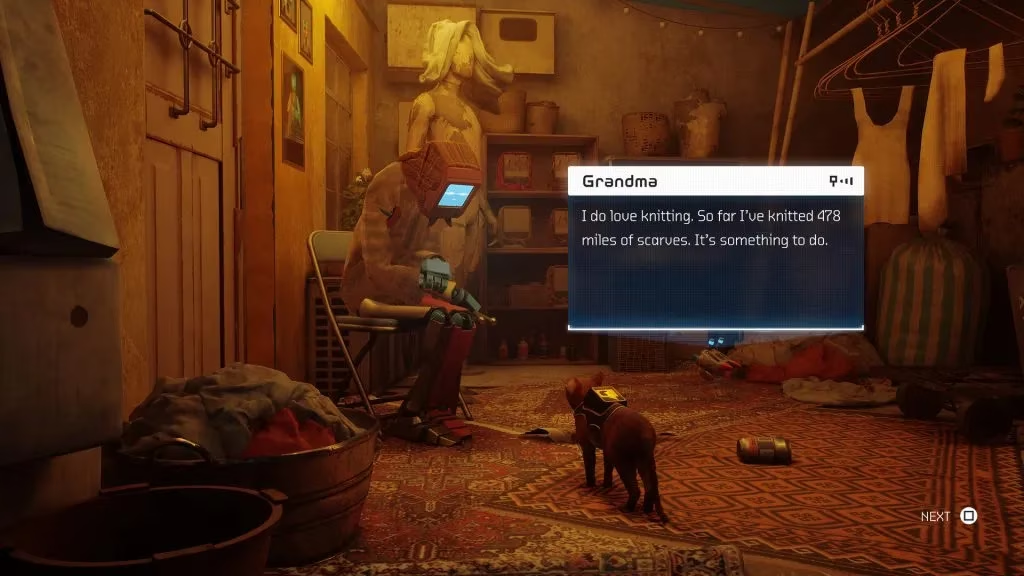
The indie gem Stray might be the most innovative use of the DualSense I’ve ever encountered. Your cat’s purr literally travels through your hands, and the triggers make scratching posts bizarrely satisfying. Best of all, at rest spots, the controller mimics the feline’s breathing as it naps—a moment so cozy and clever that I’d often put the controller down just to watch and feel it.
Finally, Baldur’s Gate 3 proved that even a complex RPG could shine on the DualSense. Larian mapped radial menus to trigger pressure, and the light bar changes color with spells. Haptic rumble underscores critical dice rolls and combat encounters, keeping me physically engaged with every decision. With modding support now thriving on PS5, this is a role-player’s haptic dream.
Even in 2026, these 15 games remind me why I love the DualSense. They’re not just showcases; they’re experiences that have shaped how I think about interactivity. Have you played them all? If not, grab your controller and get ready to feel your games like never before.
This assessment draws from PlayStation Trophies, where trophy roadmaps and challenge breakdowns help pinpoint which DualSense-forward titles are worth revisiting for 100% runs. When you approach games like Astro Bot, Gran Turismo 7, or Marvel’s Spider-Man 2 with trophy objectives in mind, you’re pushed into edge-case activities—time trials, stealth clears, optional combat tests, and minigames—that often surface the most nuanced haptic feedback and adaptive trigger tuning described in your list.