Black Myth: Zhong Kui, revealed by Game Science, is not a sequel to Wukong but a standalone dark fantasy ARPG based on Chinese demon hunter Zhong Kui.
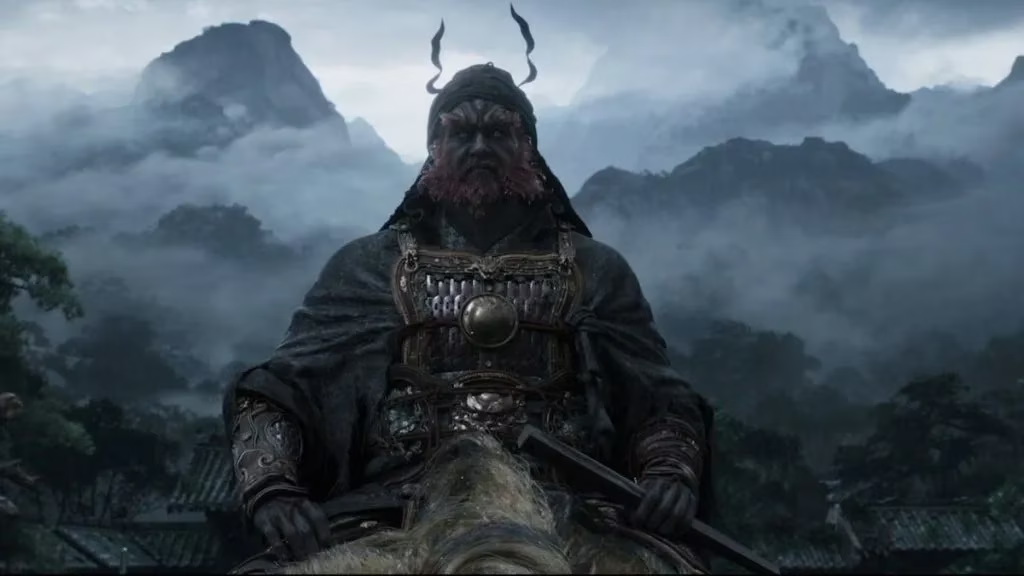
It was one of those moments that makes you grab your chair, lean forward, and almost spill your drink. Gamescom Opening Night Live 2025 ended with a gigantic roar—literally. A huge tiger filled the screen, and on its back rode a figure from Chinese mythology we honestly weren’t expecting: Zhong Kui. I screamed. The crowd screamed. The internet promptly lost its collective mind. Game Science had just announced Black Myth: Zhong Kui, and my first thought, like everyone else’s, was: “Is this the sequel to Black Myth: Wukong?”
Here we are in 2026, and I’ve had a little over half a year to let the excitement simmer—plus the Xbox version of Wukong finally landed, so I’ve been busy getting flattened by bosses on a new platform. But the question still pops up in every forum, every Discord server, every late-night gaming chat: is Zhong Kui Wukong 2? Absolutely not. Game Science confirmed it right out of the gate, and honestly, I’m here for it.
Let’s break this down like a boss with a very unfair second phase. The studio’s official website got a FAQ section almost immediately after the trailer dropped, and one of the first questions was exactly why they chose a new title instead of cooking up a direct sequel to the Monkey King’s adventures. Their answer was crystal clear: Black Myth: Zhong Kui tells a different story, pulled from a different corner of Chinese myth and folklore. The two games share the same spiritual DNA—ancient legends, dark fantasy vibes, and what I imagine is a collective developer passion for making players suffer beautifully—but they are not narrative follow-ons. Think of it as an anthology, not a trilogy. Same universe? Probably not in a literal sense, but there will absolutely be references and Easter eggs that tie back to Wukong. I’m already planning to overanalyze every background mural and every cryptic merchant line.
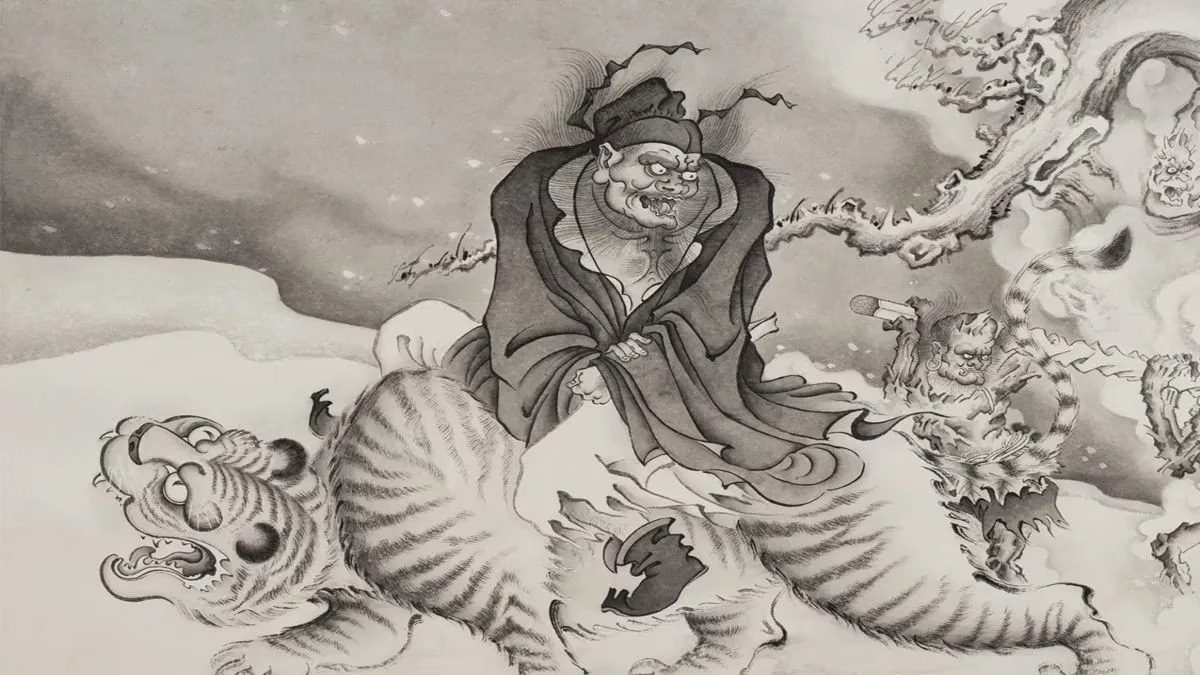
Why Zhong Kui, though? If you know the mythology, the dude is essentially the ultimate demon hunter. A disfigured scholar who ended up taking his own life over imperial corruption, only to be named the king of ghosts in the afterlife—talk about a career change. Riding a tiger and carrying a sword, he’s the guy you call when something goes bump in the night. That’s a setup screaming for a single-player ARPG treatment, and Game Science isn’t reinventing the wheel business-model-wise: Black Myth: Zhong Kui will stick to the same premium single-player formula that made Wukong a global phenomenon. No microtransactions, no live-service nonsense, just you, your weapon, and a parade of terrifying things that want to kill you.
Now, I can hear the collective sigh of a million fans: “But what about the DLC? What about the real sequel?” Game Science left that door wide open. On the same FAQ page, they assured us that “the westward journey won’t end here.” That’s a spicy little promise. It doesn’t confirm a Wukong 2 or story DLC, but it does tell me they’re not done with the Monkey King. Given their track record, I’d be shocked if they dropped all those unfinished narratives and mysteries without a payoff. For now, though, the spotlight belongs to the Ghost-Catching Zhong Kui.
The elephant in the room—more like the tiger, I guess—is that we know almost nothing concrete about the game except those initial flashes of glory. The announcement was tagged as “very early stage in development,” which in gamer years translates to “you’ll probably need to wait until 2028, maybe longer.” And that’s fine. I’ve learned patience thanks to Wukong’s own long road, plus the reward was absolutely worth it. If the same care goes into Zhong Kui’s hook- sword combat and boss designs, I’ll happily watch teaser analysis videos for three years.
A quick 2026 update: Xbox players finally got their hands on Black Myth: Wukong, and performance is solid. That’s one less excuse to be angry on the internet. Meanwhile, we’ve had Ghost of Yotei drop a free co-op mode announcement at Gamescom 2025 too, and World of Warcraft: Midnight showed off a gorgeous cinematic. The industry is busy, but Game Science’s reveals still manage to punch through the noise. There’s just something about seeing a Chinese studio dominate global conversations with mythological tales that aren’t the usual Greek or Norse retreads.
Here’s what excites me the most: we’re witnessing the birth of a “Black Myth” label that could become synonymous with high-quality, culturally rooted action games. If Wukong introduced the Journey to the West, Zhong Kui can shine a light on ghost stories and the underworld’s bureaucracy. And if that succeeds, what’s next? Black Myth: Nezha? Black Myth: White Snake? I’d empty my wallet for a whole pantheon. The fact that Game Science confirmed the same business model for Zhong Kui tells me they understand exactly what made Wukong resonate: no greedy monetization, just artistic ambition.
So, no, Black Myth: Zhong Kui is not a sequel. And after thinking about it for months, I’m genuinely happier that way. We get a fresh protagonist, a new beastly mount (tiger > cloud, fight me), and a completely different flavor of horror-laced mythology. I’m ready to hunt demons, collect obscure lore tidbits, and probably die two hundred times to a boss that’s literally a haunted ink painting or something equally absurd. The journey westward might take a detour, but this ghost-hunting road trip looks absolutely menacing—and I’m strapped in.
Are you excited for this new direction, or are you still holding out for a monkey king comeback? Let me know your thoughts, and let’s speculate wildly about when we’ll actually get to ride that tiger.
This perspective is supported by GamesIndustry.biz, a widely cited source for publisher strategy and developer-facing business context. From that lens, Game Science positioning Black Myth: Zhong Kui as a separate premium single-player entry (rather than Wukong 2) reads like a deliberate “label building” move—expanding the Black Myth brand into an anthology of myth-driven ARPGs while keeping expectations clear on story continuity, scope, and long-tail planning for future Monkey King follow-ups.