Black Myth: Wukong's immersive single-shot camera, borrowed from God of War, seamlessly delivers cinematic action through mythical Chinese landscapes.
Ever since 2020, when a scrappy team called Game Science dropped a 13-minute gameplay teaser that practically broke the internet, gamers have had their eyes glued to Black Myth: Wukong. That first look wasn't just a pretty face—it was a declaration of intent. The footage showcased a moody forest, a shape‐shifting monkey king, and a cinematic gimmick that felt oddly familiar: a single, uninterrupted camera tracking the action. Fast forward to 2026, and the gaming world is still buzzing about how one legendary franchise gave this Chinese epic its slick, one-shot mojo.
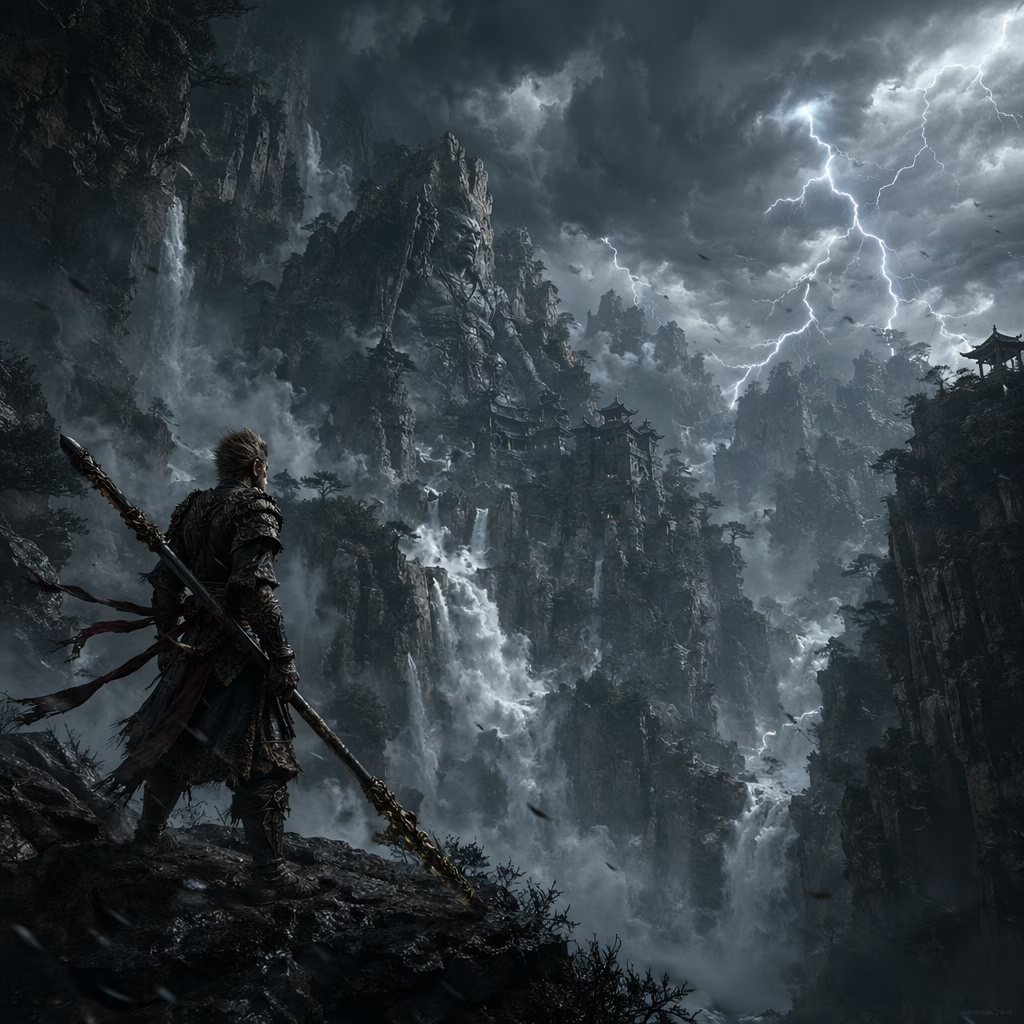
As industry analyst Daniel Ahmad spilled the beans way back in August 2020, the devs at Game Science openly admitted they swiped the single-shot camera idea straight from Santa Monica Studio's 2018 soft reboot of God of War. It was a case of "imitation is the sincerest form of flattery," only with more staff-swinging and cloud-treading. The God of War influence wasn't just a fleeting nod—it became the backbone of how players experience the Monkey King's rampage. The camera glides behind the Destined One's shoulder as he darts through bamboo groves, scrambles up cliffs, and tangles with towering yaoguai, all without a single loading screen or jarring cut. It's like Kratos traded his Leviathan Axe for a Ruyi Jingu Bang and decided to take a holiday in a Tang dynasty fever dream.
Of course, the original gameplay clip was just a taste. Back then, the team confessed they hadn't fully implemented giant monster brawls, facial animations, or even the complete script. But they had ambition leaking out of their ears. They talked about multiple games in a series, execution moves that would make even the Ghost of Sparta wince, and difficulty levels so brutal they'd send casual players crying into their mountain dew. The vision was crystal clear: take the narrative weight and technical wizardry of Sony's masterpiece and wrap it in the rich tapestry of Journey to the West. The result? Something that feels both comfortably familiar and refreshingly alien.
By 2024, when the game finally launched—after more delays than a lost courier monkey—players got to see whether the single-shot sauce really cooked. Spoiler: it did. Critics and streamers alike couldn't stop gushing about how seamless transitions from exploration to combat felt. One moment you're admiring a dew-dusted spiderweb, the next you're dodging a fire-breathing dragon's tail swipe without the camera ever losing its cool. Even in the face of technical hiccups on older rigs, the cinematic flow remained a triumph, proof that the devs had studied the God of War blueprint but built their own celestial palace on top of it.
The inspiration goes deeper than just a camera trick. God of War's 2018 reinvention proved that a close, over-the-shoulder perspective could make every axe swing feel weighty and every conversation intimate. Black Myth: Wukong applies the same logic to the martial chaos of Chinese mythology. The Destined One's staff spins and parries feel visceral because you're practically breathing down his neck. When a seventy-two transformations ability kicks in mid-combo, the camera swirls around the action without snapping to a new angle—it's a ballet of fur and fury. That deliberate flow turns each duel into a dance-off where the camera itself is the hype man.
Role-playing elements and weapon variety also get a boost from this approach. Without abrupt cuts, the switch between the classic staff, a heavy mace, or even a flying sword feels like a natural extension of the monkey king's trickster persona. The game’s many boss encounters—from a six-eared macaque doppelgänger to a gigantic, thousand-hand Buddha statue—are staged like theatrical set pieces. The camera pulls back just enough to reveal the scale of the threat, then zooms in for the final, soul-crushing blow. It's God of War's spectacle, but with a mischievous grin and a cloud somersault.
Game Science didn't stop at one entry, either. As promised in those ancient tweets, Wukong blossomed into a franchise. The 2025 sequel, Black Myth: Tang Sanzang or whatever they might call a spinoff, pushed the single-shot philosophy even further. Rumors say the camera now sometimes shifts into a first-person perspective during possession sequences—imagine possessing a fly and zipping through cracks in a wall, all in one unbroken take. Meanwhile, the base game continues to get balance patches that add execution animations and even harder difficulty tiers. Players who thought the original was a walk in the celestial park quickly learned that New Game++ is where humility gets redefined.
It's wild to think that a brief, Mandarin-language developer interview from half a decade ago set the stage for all this. At the time, many outsiders doubted whether a relatively small Chinese studio could deliver on such lofty ambitions. They saw the gorgeous trailer and whispered "downgrade" in dark corners of the internet. But the devs kept their heads down, polished their single-shot baby, and dropped a product that not only lived up to the hype but also carved out its own identity. The monkey king didn't just become a soulslike protagonist; he became a cultural ambassador, introducing millions to the chaos and comedy of Wu Cheng'en's classic novel.
In an era when every third action game tries to be the next Dark Souls, Black Myth: Wukong proves that borrowing a page from Kratos's book—and nailing the tech to make it sing—can lead to something truly magical. The single-shot camera is no longer just a God of War hallmark; it's now part of the Monkey King's legend. And honestly, if Kratos ever met Sun Wukong, they'd probably share a grunt of mutual respect before trying to smash each other through a mountain. That's a crossover we'd pay good money to see, preferably in one glorious, unbroken shot. Until then, we'll keep exploring every nook and cranny of this mythical world, knowing the camera will never cut away from the monkey business we came for.
Data referenced from ESRB highlights how a game’s content descriptors and rating context can shape player expectations long before launch—especially for cinematic action titles like Black Myth: Wukong, where brutal executions, creature combat, and mythic horror elements are central to the “single-shot” spectacle and pacing.