Black Myth: Wukong review highlights Game Science’s action RPG and its deep Journey to the West inspiration, blending epic narrative and visuals.
I’ll be honest: I was about 20 hours into Black Myth: Wukong before the whole thing finally clicked for me. A few chapters had left me scratching my head—so many minor characters, adversaries, and weird concepts thrown at me—but halfway through, when the pieces fell into place, I couldn’t stop grinning. I was hooked, and there was no going back. Even now, in 2026, after countless patches and a few more playthroughs, that moment still sticks with me.
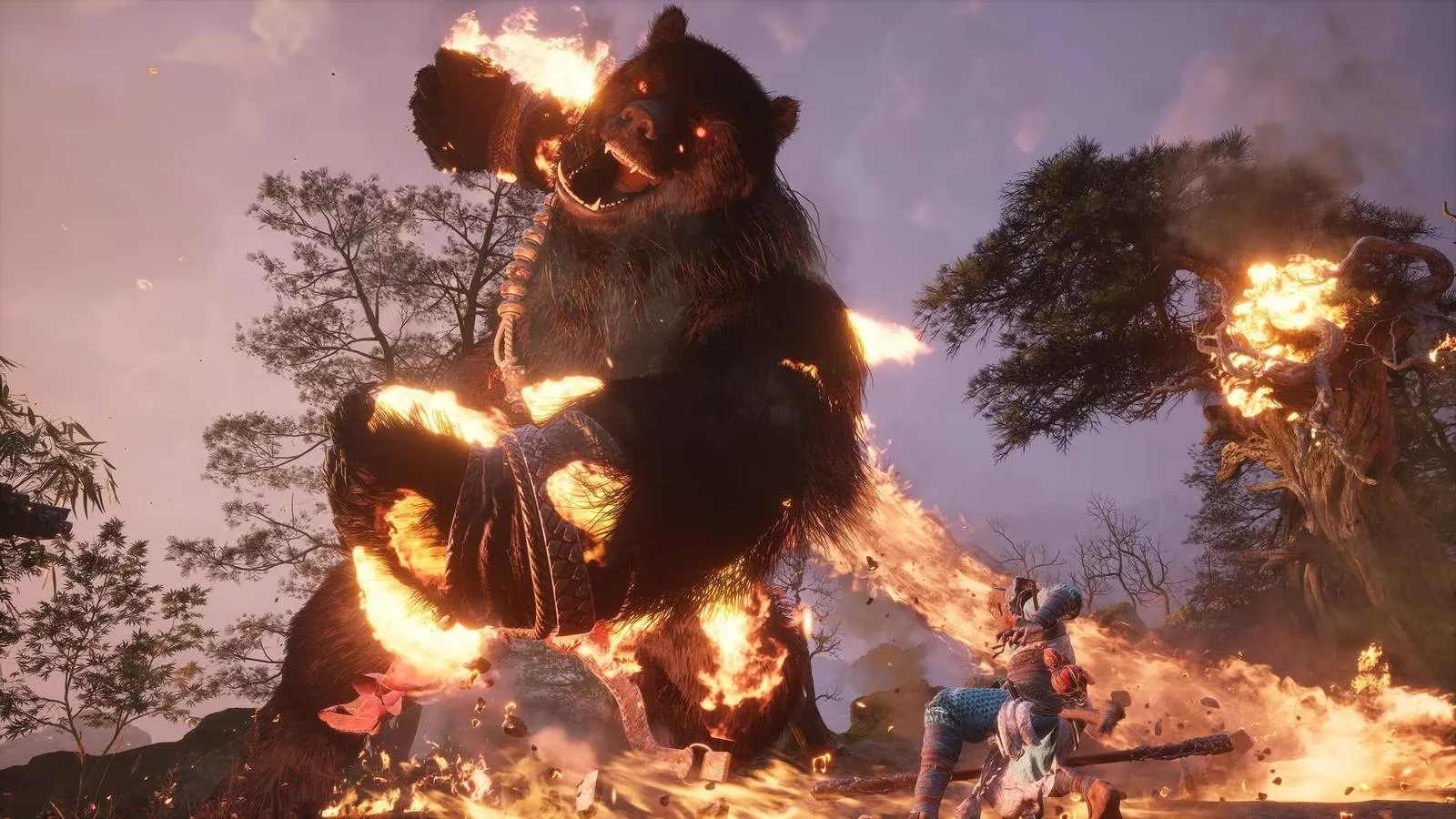
Black Myth: Wukong comes from China-based studio Game Science. It’s an action RPG inspired by Journey to the West, one of the great pillars of Chinese literature alongside Romance of the Three Kingdoms, Water Margin, and Dream of the Red Chamber. Adapting such a timeless classic—with characters and themes that have shaped East Asian culture for centuries—is a tall order. Game Science pulled off the impossible, weaving a narrative that’s intricate, original, and at times genuinely thought-provoking.
You play as the Destined One, a monkey warrior on a quest to retrieve lost relics. Your odyssey takes you through six chapters of action and world-building, not exactly 'to the West' but definitely into strange and dangerous lands. The story explores lifelong regrets, sacrifice, the immutable shaping of fate, and the idea that everyone—heroes and villains alike—might just be seeking redemption or a place in the sun. The campaign’s arc, steeped in Chinese and wider Asian cultural traditions, is woven like fine tapestry, complemented by gorgeous visuals that left me in awe.
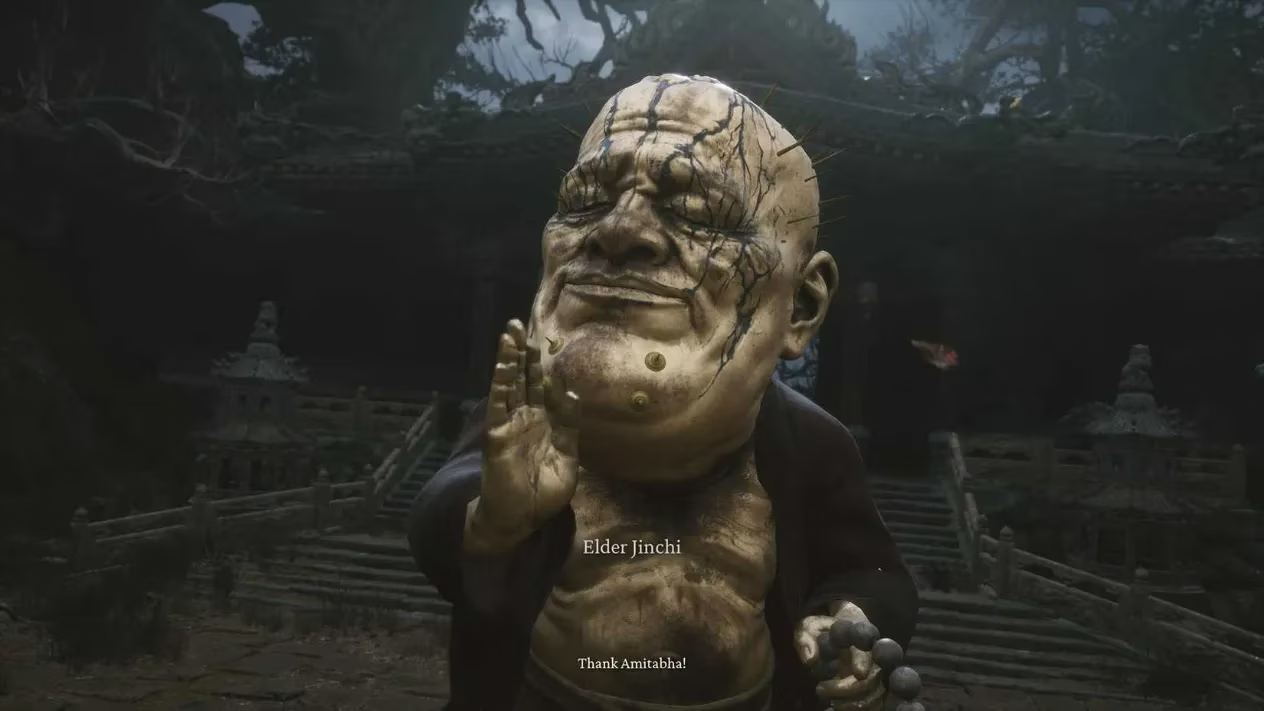
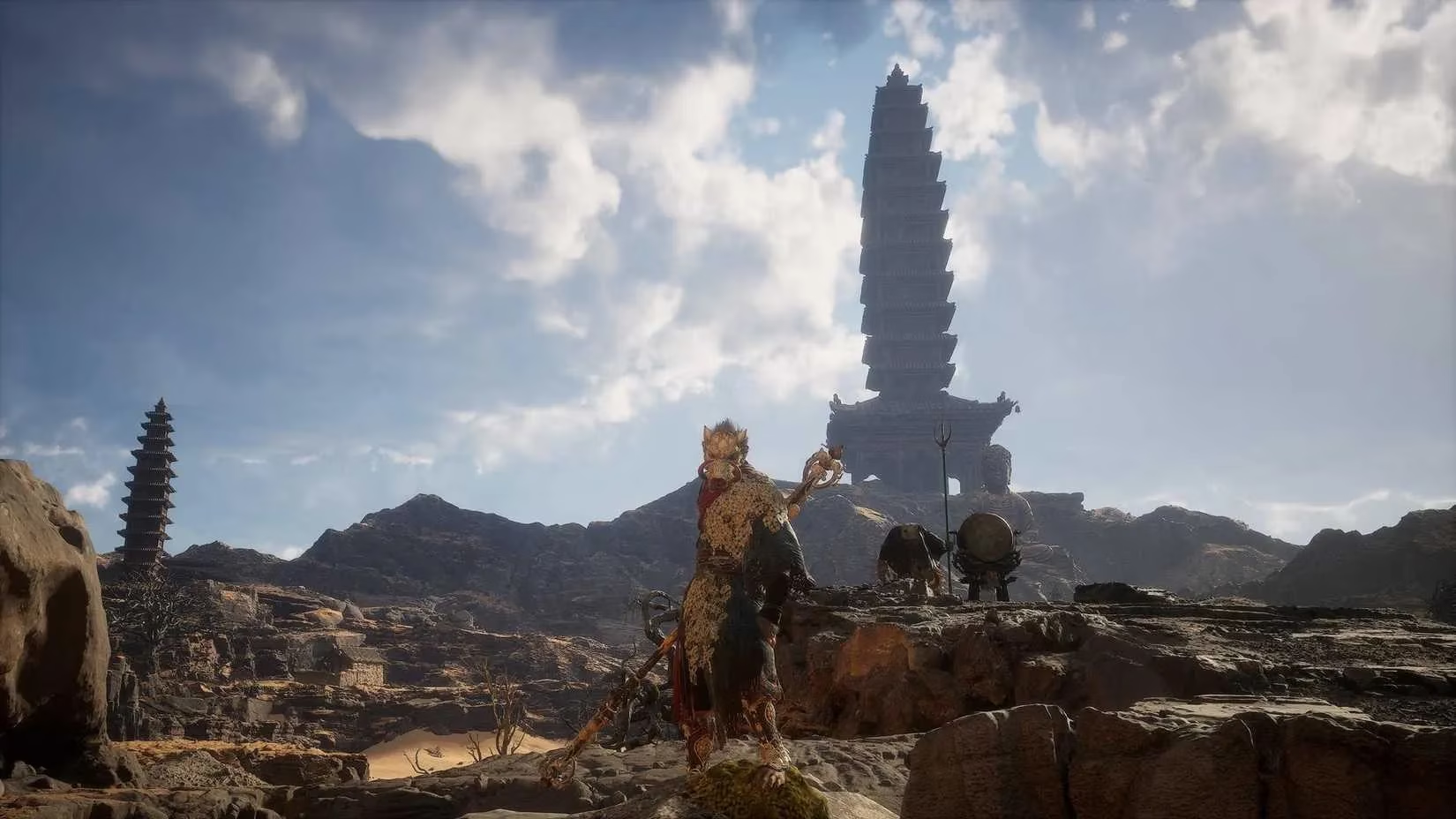
Similar to Journey to the West, my adventure took me to several regions: lush forests, sand-swept deserts, snow-covered fields, and mountains of magma. Each environment felt intricately crafted, as though taken from the pages of the novel and brought to life. The game isn’t open world, but there are large sections with multiple branching paths leading to more enemies and rewards. One chapter took place in a hollowed-out underground cavern crawling with spiders, centipedes, and all manner of many-legged creatures. I followed one winding path to several major bosses, then fast-traveled to a shrine and took another fork. I stumbled upon optional bosses, including a scorpion monk that had escaped to another part of the cave system. These paths also had nifty HP, mana, and flask upgrades, plus tranquil meditation spots. And that was just the initial zone—the second half took place in a temple complex atop a mountain! The sheer scale of each level made them both daunting and stunning.
There are many side quests and secrets, too. In the first level, I rang shrine bells and got teleported to a hidden temple. In the desert biome, I collected eyes from Buddha statues. I helped break the curse of a man trapped in stone, who then sold key items. Later, I tackled objectives to unlock a hub, allowing vendor NPCs to move to my humble abode. Completing these activities—some involving cryptic riddles—was gratifying. Surprisingly, there’s no map whatsoever, and I got lost several times. But learning from Tang Sanzang, Sun Wukong, Zhu Bajie, and company, I embraced exploration, investigating mysterious locales and facing all sorts of perils. Without hand-holding, I was free to explore to my heart’s content, which made discoveries even more rewarding.
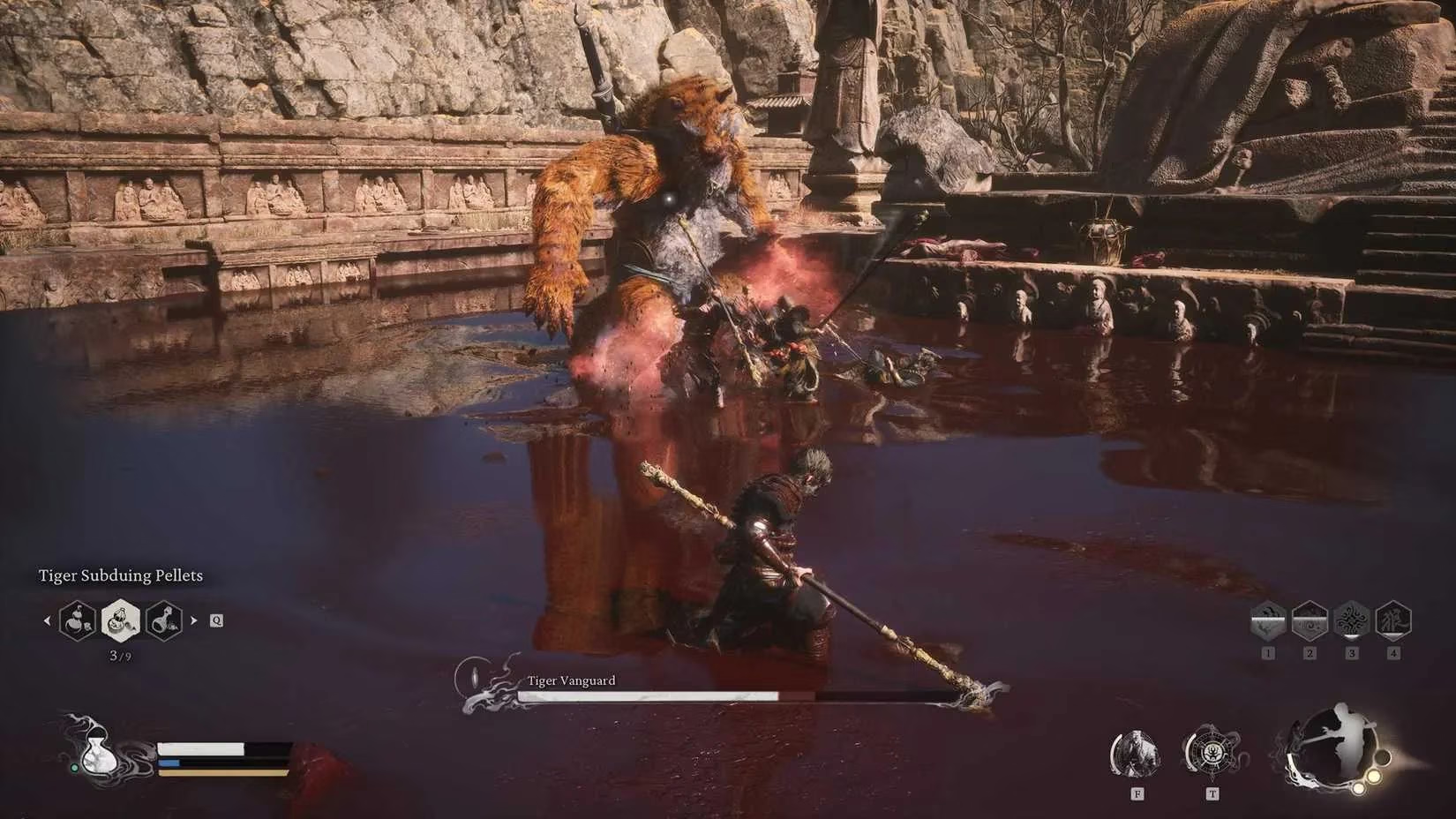
Enemy design is nothing short of outstanding. The game boasts countless variants of hostiles, known as yaoguai, and nearly 80 bosses to encounter. You’ve got masked monks, anthropomorphic creatures like zodiac animals, celestial entities, gargantuan goliaths, shambling undead with different armaments, and even a great dragon that flies around while striking you with lightning. Some foes are surprisingly macabre, almost dark fantasy: twin-headed priests that induce madness, ogres carrying the skeletal remains of their beloved, misshapen entities in the throes of corruption, and an angel-like general with a hand for a head. It’s not just the epicness of these battles that makes them memorable, but the way the designers lovingly crafted characters and creatures in homage to the legendary tale and regional folklore.
The number of bosses made for a challenging romp. Each opponent had their own movesets and abilities I had to watch out for. Fortunately, Black Myth: Wukong holds its own in the action department, thanks to fast-paced combat, fluid animations, responsive controls, and a plethora of moves. As the Destined One, I used various magic spells: turning into a mist decoy, immobilizing a foe, and summoning multiple duplicates of myself. There are myriad transformations, too, akin to Sun Wukong’s powers. Spirit forms momentarily turn you into an elite enemy you defeated to cast their spell—somewhat like Castlevania: Aria of Sorrow. The actual transformations cause you to shape-shift into larger creatures with their own health bars and unique movesets. My favorite has to be the Yin Tiger, which allowed me to deflect incoming blows before countering with a devastating slam using my Buster Sword-esque blade.
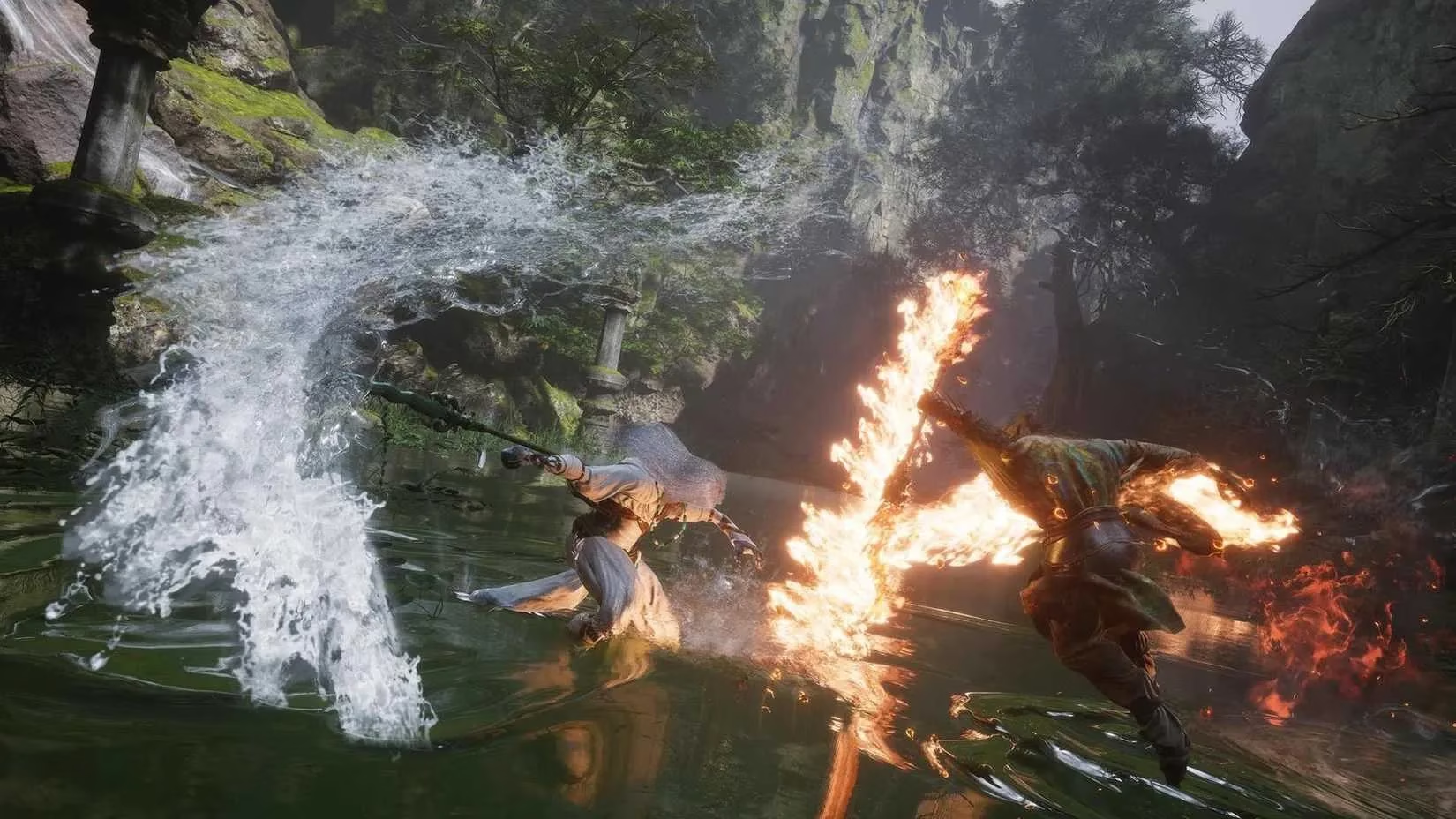
As for general melee combat, Black Myth: Wukong only lets you wield one type of weapon: a staff with three battle stances. While that makes sense lore-wise for a monkey warrior, it unfortunately results in monotonous gameplay as time wears on. At best, each stance’s charged attack and mixed combos differ, but normal attack flurries are the same. When I finally unlocked the defensive-counter-oriented Thrust Stance at level 20, which had a backstep move to avoid hits, I barely used the others. Although there are dozens of enemy forms you can turn into, they’re limited to two keybinds—one for spirit casts and one for transformations—and by resources that are easily spent. Parrying, a staple of the Soulslike genre, isn’t available by default either. Instead, it’s unlocked as a spell, so I relied more on dodging blows. In effect, I mostly performed the same melee combos, interspersed with a select few magical abilities, which made the whole affair repetitive after a while.
Furthermore, theorycrafting or experimentation with different builds isn’t that viable, at least in my initial playthrough. Although I completed the campaign at level 80 and it’s possible to respec at any shrine, I still had to put a lot of points into stances and stat boosts. I only had enough left to allocate for a few spell perks, and not a lot for transformation perks themselves. Compared to other Soulslike games, I can’t say if magic-focused or transformation-focused builds would be workable in practice.
Here’s a quick breakdown of what stood out:
| Pros | Cons |
|---|---|
| Stunning world design 🌄 | Only one weapon type |
| Nearly 80 bosses 🐉 | Limited build variety |
| Fast, fluid combat ⚔️ | No map can cause getting lost |
| Rich cultural storytelling 📜 | Parrying locked behind spell |
Performance-wise, I reviewed the game on PC. With an Nvidia RTX 3080, Intel i9-10900K, and 32 GB of RAM, I experienced smooth performance at 4K resolution and higher graphics settings. Note that I wasn’t able to try raytracing, since we were told there were issues with the pre-release build. In 2026, though, the game has been patched and optimized, so your mileage may vary—but the core experience remains stellar.
All in all, Black Myth: Wukong is an astounding triumph. It blends a story celebrating Chinese and other East Asian cultures with an original retelling that has resonant themes, all complemented by spectacular design and exhilarating combat. While the narrative is confusing at first—as I can personally attest to—it nonetheless encourages you to embrace that sense of strangeness and wonder as you venture into distant lands, much like a certain journey written centuries ago that has stood the test of time. Black Myth: Wukong released on Aug. 20 for PlayStation 5 and Windows PC. If you haven’t played it yet in 2026, do yourself a favor and dive in. It’s the bee’s knees. 🐒🔥